
From easy riverside walks to mountain-top vistas, here’s how to choose the outdoor experiences that are actually worth your time in Gatlinburg.

The Smokies Begin Where Traffic Light #10 Ends
For many first-time visitors, Gatlinburg is defined by the Parkway. The main corridor is lined with pancake houses, mountain coasters, candy kitchens, distilleries, and enough attractions to keep a family busy for days. There is nothing wrong with spending time there—it is part of what makes Gatlinburg unique. The mistake many visitors make is assuming the Parkway is the destination rather than the gateway to outdoor things to do in Gatlinburg.
One of the most remarkable things about Gatlinburg is how abruptly the town ends and the mountains begin. Drive south past Traffic Light #10 and the transition is almost immediate. The storefronts disappear, the road begins following the West Prong of the Little Pigeon River, and within moments you are entering Great Smoky Mountains National Park. Few destinations in America offer such direct access from a busy tourist district to protected wilderness.
That easy access can also be deceptive. Great Smoky Mountains National Park is enormous, and not every outdoor activity requires the same investment of time or energy. A leisurely walk along the Gatlinburg Trail just outside town is a completely different experience from spending half a day exploring Roaring Fork Motor Nature Trail, driving more than an hour to reach Cades Cove during peak season, or climbing thousands of feet in elevation on the way to Mount LeConte.
Planning matters. Visitors often underestimate driving times, overlook seasonal traffic patterns, or arrive at popular trailheads only to discover parking challenges. It’s also important to remember that while entry into Great Smoky Mountains National Park remains free, vehicles parked for more than 15 minutes inside the park generally require a valid parking tag.
The goal isn’t to see everything. The goal is to choose the outdoor experiences that best fit your trip. Some visitors want an easy scenic drive with frequent overlooks. Others are searching for waterfalls, wildlife, mountain views, or family-friendly outdoor attractions. Whether you have a few hours, a long weekend, or an entire week in the Smokies, this guide will help you identify which experiences are most likely to be worth your valuable vacation time.
Before planning your outdoor itinerary, take a look at our complete guide to Things To Do In Gatlinburg for a broader overview of attractions, activities, dining, and experiences throughout the area.
Outdoor Activities at a Glance
One of the first lessons many visitors learn in the Smokies is that distances on a map can be deceiving. What looks like a quick stop often turns into a half-day adventure once you factor in mountain roads, scenic overlooks, wildlife sightings, and the simple temptation to pull over for “just one more photo.”
That’s not a complaint—it’s part of the charm.
The challenge isn’t finding something to do outdoors in Gatlinburg. The challenge is deciding which experiences deserve a place on your itinerary. Whether you’re looking for panoramic mountain views, a waterfall hike, an easy family outing, or a scenic drive through some of the most beautiful landscapes in the eastern United States, the guide below will help you quickly identify the outdoor experiences that best match your travel style and available time.
Which Outdoor Experience Is Right for You?
| If Your Goal Is… | Best Choice | Why It Stands Out | What You Should Know Before You Go | Typical Time Needed |
|---|---|---|---|---|
| Panoramic mountain views | Kuwohi | The highest point in Great Smoky Mountains National Park offers sweeping views across the Smokies and beyond. | The access road is seasonal and typically closes during winter. The paved half-mile walk to the observation tower is steep and can feel surprisingly strenuous due to the elevation. | 3–4 Hours |
| Waterfalls | Rainbow Falls | One of the park’s most impressive waterfalls, dropping approximately 80 feet over a rugged mountain landscape. | The hike is more challenging than many visitors expect. Always check current trail conditions before heading out. | Half Day |
| Wildlife viewing | Cades Cove | One of the best places in the Smokies to spot black bears, deer, wild turkeys, and historic homesteads. | Reaching Cades Cove requires a significant drive from Gatlinburg, and wildlife traffic can easily extend your visit. | Half Day to Full Day |
| Easy walking | Gatlinburg Trail | A gentle riverside walk following the West Prong of the Little Pigeon River. | One of only two trails in the national park that allows leashed dogs and bicycles. | 1–2 Hours |
| Family-friendly mountain adventure | Anakeesta | Mountain views, elevated walkways, gardens, dining, and activities for all ages. | Admission is required, but it eliminates many of the parking and trailhead challenges found inside the national park. | Half Day |
| Thrill rides | Mountain Coasters | A uniquely Smoky Mountain experience that lets riders control their own speed through the hillsides. | A great alternative when national park parking lots and scenic roads are crowded. | 1–2 Hours |
| Scenic driving | Roaring Fork Motor Nature Trail | Historic cabins, mountain streams, old-growth forest, and access to several popular trailheads. | Seasonal road closures occur during winter months. Large vehicles and trailers are not recommended. | 2–3 Hours |
Matching the Experience to Your Travel Style
The temptation in Gatlinburg is to try to do everything. After all, the Smokies offer waterfalls, wildlife, scenic drives, mountain overlooks, hiking trails, and outdoor attractions all within a relatively small region. But after spending time here, I’ve noticed that the visitors who seem happiest at the end of the day are usually the ones who choose one memorable experience and fully enjoy it rather than racing from attraction to attraction.
If this is your first visit, I would start with a classic Smoky Mountain experience and build your day around it. A morning exploring Roaring Fork Motor Nature Trail, an afternoon at Anakeesta, or a wildlife-focused trip to Cades Cove often leaves a stronger impression than an itinerary packed with too many stops. The mountains have a way of slowing you down, and that’s usually when they are at their best.
Families often find that simpler adventures create the most enjoyable days. The Gatlinburg Trail provides beautiful scenery without requiring a strenuous hike, while Anakeesta offers mountain views and entertainment that appeal to multiple generations. If you’re planning a trip with children, you’ll find additional ideas in our guide to Family-Friendly Things To Do In Gatlinburg.
Couples may prefer a different pace altogether. An early morning walk along the Gatlinburg Trail, a scenic drive through the national park, or an evening view from the higher elevations along Newfound Gap Road can feel worlds away from the crowds downtown. For more ideas, explore our guide to Things To Do In Gatlinburg for Couples.
The good news is that there really isn’t a wrong choice. The Smokies offer enough outdoor experiences to fill multiple vacations. The key is choosing the activities that best fit your interests, your schedule, and the kind of memories you hope to take home. The rest of this guide will help you do exactly that.
Great Smoky Mountains National Park Experiences
Why the National Park Is the Real Outdoor Attraction
Most first-time visitors arrive in Gatlinburg expecting to spend their vacation on the Parkway. That’s understandable. The main strip is packed with attractions, restaurants, shops, and enough entertainment to keep a family busy for days. But after several trips to the Smokies, I’ve become convinced that the real attraction begins where the Parkway ends.
Drive south past Traffic Light #10 and the transition is immediate. The souvenir shops disappear, the road begins following the West Prong of the Little Pigeon River, and within moments you’re entering Great Smoky Mountains National Park. Few destinations in America offer such easy access to a national park from the center of town.
What surprises many visitors is the sheer size of the place. Looking at a map, it can seem as though everything is close together. In reality, the park contains more than 800 miles of trails, dozens of waterfalls, scenic mountain roads, historic settlements, and vast stretches of wilderness. A trip to Cades Cove, Kuwohi, or Mount LeConte isn’t a quick side excursion. These are experiences that deserve their own time on your itinerary.
One practical detail worth knowing before you go: while entry into Great Smoky Mountains National Park remains free, vehicles parked for more than 15 minutes generally require a valid parking tag. It’s a simple thing to overlook, but it’s one of the most common mistakes first-time visitors make.
Best Easy Hikes for First-Time Visitors
Not every memorable Smoky Mountain experience requires hiking boots and a full day on the trail. Some of the park’s most enjoyable walks are accessible to families, casual visitors, and anyone who simply wants to spend time outdoors without a strenuous climb.
Gatlinburg Trail
Distance: 3.8 miles round-trip
If I were introducing someone to the Smokies for the very first time, this is often where I’d start.
The Gatlinburg Trail follows the West Prong of the Little Pigeon River between Sugarlands Visitor Center and the southern edge of Gatlinburg. The route is mostly flat, easy to follow, and provides plenty of opportunities to enjoy the river without committing to a challenging hike.
What makes this trail especially useful is its flexibility. You can walk the entire route or simply stroll a short distance before turning around. Either way, you’ll get a genuine feel for the landscape that makes the Smokies so popular.
Parking is available near Sugarlands Visitor Center and the park entrance, but remember that a parking tag is required if you’re parked longer than 15 minutes.
One important distinction: the Gatlinburg Trail is one of only two trails in Great Smoky Mountains National Park where leashed dogs and bicycles are permitted. For visitors traveling with pets, that fact alone often makes it the easiest choice.
Best For: Families, casual walkers, visitors with dogs, photographers, and first-time visitors.
Laurel Falls Trail
Distance: 2.6 miles round-trip
Laurel Falls has long been one of the most popular waterfall destinations in the Smokies, and for good reason. The trail leads to an 80-foot waterfall that splits into upper and lower sections as it tumbles through a narrow mountain gorge.
However, visitors planning a trip here should pay close attention to current park updates. Laurel Falls Trail is undergoing major infrastructure improvements, including trail reconstruction and safety upgrades. Conditions and access can change throughout the project, so checking the latest National Park Service information before your visit is essential.
When fully open, parking can become one of the biggest challenges. During spring, summer, and fall, the trailhead parking area often fills early in the morning. Arriving before 8:00 a.m. typically provides the best chance of avoiding both crowds and parking frustrations.
Best For: Visitors wanting a classic Smoky Mountain waterfall experience.
Sugarlands Valley Nature Trail
Distance: 0.5-mile paved loop
Not every visitor is looking for a mountain climb, and that’s exactly why the Sugarlands Valley Nature Trail is such a valuable part of the park.
Located just beyond Sugarlands Visitor Center, this fully paved trail offers a gentle introduction to the Smokies. The route is accessible, easy to navigate, and suitable for visitors using wheelchairs, mobility devices, or strollers.
Families with young children often appreciate this trail because it allows everyone to enjoy the forest without worrying about steep climbs, rocky terrain, or exposed roots.
Best For: Families with toddlers, visitors seeking accessible trails, and anyone wanting a short outdoor experience.
Best Moderate Hikes
These trails require more effort, but they also deliver some of the most rewarding scenery in the Smokies.
Alum Cave Trail
Distance to Alum Cave Bluffs: 4.6 miles round-trip
If someone asked me to recommend a single moderate hike that captures the spirit of the Smokies, Alum Cave would be near the top of the list.
The trail begins on Newfound Gap Road and wastes very little time getting interesting. Hikers pass through Arch Rock, navigate narrow ledges near Inspiration Point, and eventually arrive beneath the enormous overhang known as Alum Cave Bluffs.
What I like most about this trail is how much variety it packs into a relatively manageable distance. Every mile feels different from the one before.
The biggest challenge isn’t usually the hike itself—it’s parking. During peak seasons, the designated parking areas often fill before 7:30 a.m. If this hike is a priority, an early start is strongly recommended.
Typical Hiking Time: 3–5 hours to Alum Cave Bluffs and back.
Rainbow Falls Trail
Distance: 5.4 miles round-trip
Rainbow Falls is one of those hikes where the destination earns every step.
The trail climbs steadily through hardwood forest before reaching an 80-foot waterfall that ranks among the tallest in the national park. On sunny afternoons, mist from the falls can create the rainbows that gave the trail its name.
Spring often provides the strongest water flow, while autumn adds colorful foliage to the surrounding forest. Regardless of season, hikers should be prepared for a sustained uphill climb and potentially muddy conditions.
Typical Hiking Time: 4–5 hours.
Abrams Falls
Distance: 5.2 miles round-trip
Abrams Falls has a reputation for being easier than it actually is.
While the elevation gain isn’t extreme, the trail constantly rolls up and down across uneven terrain. Many visitors find it more tiring than expected, especially on warm summer afternoons.
The waterfall itself stands only about 20 feet high, but the volume of water rushing through the narrow gorge is impressive. It is one of the most powerful waterfalls in the park.
A critical safety note: swimming beneath Abrams Falls is prohibited and extremely dangerous. The pool below the falls contains powerful currents and hidden undertows that have contributed to numerous fatalities over the years.
Visitors should also remember that the trailhead sits within Cades Cove. Reaching it requires driving part of the one-way loop road, which can add significant time to your day during busy seasons.
Best Challenging Hikes
For hikers looking to earn unforgettable views, these trails provide some of the most rewarding experiences in the Smokies.
Mount LeConte
Shortest Route (Alum Cave): Approximately 11 miles round-trip
Few hikes in the eastern United States inspire the loyalty that Mount LeConte does.
The summit area rises to more than 6,500 feet and offers cooler temperatures, high-elevation spruce-fir forests, and some of the most dramatic scenery in the Smokies. Reaching it requires commitment, but many hikers consider it the highlight of their entire trip.
Several trails lead to the summit area, including Alum Cave Trail, Rainbow Falls Trail, Bull Head Trail, and Trillium Gap Trail.
Visitors interested in staying at LeConte Lodge should plan well in advance. Reservations are famously difficult to obtain and are often secured many months before the hiking season begins.
A fun piece of Smoky Mountain tradition: hikers on Trillium Gap Trail occasionally encounter the famous supply llamas that help transport goods to LeConte Lodge several times each week.
Typical Hiking Time: 6–10 hours depending on route and pace.
Charlies Bunion
Distance: 8.1 miles round-trip
For pure mountain scenery, Charlies Bunion is hard to beat.
The hike begins at Newfound Gap along US-441 and follows a section of the Appalachian Trail through high-elevation forest. Eventually the trees open, revealing a dramatic rocky outcrop with sweeping views across both Tennessee and North Carolina.
Because the trail spends much of its time above 5,000 feet, conditions can be very different from what you’ll experience in Gatlinburg. Temperatures are often noticeably cooler, and weather can change rapidly.
Whenever I hike Charlies Bunion, I’m reminded that some of the Smokies’ best views require a little patience and effort. Fortunately, this is one of those hikes where the reward more than justifies the climb.
Typical Hiking Time: 4–6 hours.
Spring is one of the best seasons to experience these trails, with flowing waterfalls, blooming wildflowers, and comfortable temperatures throughout much of the park. For seasonal trip ideas, see our guide to Things To Do In Gatlinburg in Spring.
Scenic Drives That Deliver Maximum Views
Not every unforgettable Smoky Mountain experience requires hiking boots. Some of my favorite moments in the national park have come while simply driving a winding mountain road, pulling over at an overlook, and watching the ridges change color as clouds drift through the valleys.
The beauty of the Smokies is that each scenic drive offers a completely different experience. Roaring Fork feels intimate and historic. Newfound Gap Road climbs into the high mountains. Cades Cove opens into a broad valley where wildlife often becomes part of the day’s entertainment.
Before setting out, remember one important detail: if you plan to park anywhere inside Great Smoky Mountains National Park for more than 15 minutes, you’ll generally need a valid parking tag. Fortunately, they’re easy to purchase at locations such as Sugarlands Visitor Center and can save you from an expensive surprise later in the day.
Roaring Fork Motor Nature Trail
If Newfound Gap Road showcases the grand scale of the Smokies, Roaring Fork reveals the details.
The one-way loop begins off Cherokee Orchard Road near Traffic Light #8, but the experience really starts after passing the Noah “Bud” Ogle farmstead. From there, the road narrows, the forest canopy closes overhead, and the sounds of modern Gatlinburg quickly fade away.
What I appreciate most about Roaring Fork is how it combines scenery with history. Along the route you’ll encounter preserved sites such as the Ephraim Bales Cabin, the Alex Cole Cabin, and the Alfred Reagan Tub Mill. These aren’t museum exhibits. They are reminders that families once carved out a living in these mountains long before tourism arrived.
Morning is generally the best time to drive the loop. Wildlife is more active, lighting conditions are softer, and traffic is significantly lighter. During summer afternoons and peak fall foliage weekends, congestion can build around popular trailheads and waterfall access points.
Photographers should pay attention to the filtered light beneath the dense tree canopy. Early morning and late afternoon often create the most dramatic conditions, especially near streams and historic structures.
Don’t rush the final section of the drive. Near the end of the loop you’ll pass the aptly named Place of a Thousand Drips, a seasonal waterfall that flows directly beside the roadway after periods of rain.
One final tip: Roaring Fork eventually connects with the Gatlinburg Arts & Crafts Community. Instead of immediately fighting Parkway traffic, consider spending an hour exploring local artisan studios before returning to town.
Newfound Gap Road
If I only had one scenic drive to introduce someone to the Smokies, Newfound Gap Road would be difficult to beat.
Following US-441 south from Gatlinburg, the road climbs thousands of feet in elevation, crossing the Tennessee-North Carolina state line before descending toward Cherokee. Every few miles the perspective changes. Valleys become ridges. Ridges become mountain panoramas.
Several overlooks deserve special attention.
Carlos Campbell Overlook offers one of the best roadside views of Mount LeConte. Morton Overlook is a favorite sunset location among photographers and often rewards patient visitors with dramatic evening light. At Newfound Gap itself, the Rockefeller Memorial commemorates President Franklin D. Roosevelt’s dedication of the national park in 1940.
Many visitors also use this road to reach Kuwohi, the highest point in Tennessee. The turnoff is located along Newfound Gap Road, making it easy to combine both experiences into a single day.
One thing I’ve learned over the years is never to trust the weather forecast in the mountains. Conditions at Newfound Gap can be dramatically different from conditions in Gatlinburg. A sunny 85-degree afternoon downtown may translate into cool temperatures, fog, and strong winds at higher elevations.
Keep a lightweight jacket in the car. You’ll likely use it.
For photographers, sunrise often produces layers of fog floating through the valleys, while late afternoon and sunset provide the warmest light for mountain landscapes.
Cades Cove
No scenic drive in the Smokies generates more excitement—or more unrealistic expectations—than Cades Cove.
On paper, it sounds simple: an 11-mile one-way loop through a mountain valley filled with wildlife and historic buildings. In reality, Cades Cove is an all-day commitment, and planning accordingly can make the difference between a memorable experience and a frustrating one.
The valley sits roughly 27 miles from downtown Gatlinburg. Under ideal conditions, reaching the loop entrance takes about an hour. Once inside, traffic, wildlife sightings, historic stops, and photography opportunities often stretch the experience to five or six hours.
That extra time isn’t usually caused by road construction or accidents.
It’s caused by bears.
Locals jokingly refer to them as “bear jams.” A single black bear feeding near the road can bring traffic to a complete stop as visitors reach for cameras and binoculars. The same thing happens when deer, turkeys, or coyotes appear in the open fields.
If wildlife viewing is your priority, position passengers on the right side of the vehicle whenever possible. Many of the valley’s open meadows—where wildlife is most commonly spotted—are easier to view from that side of the road.
History lovers should make time for the John Oliver Cabin and the Cable Mill area, which also provides restrooms and visitor services. If traffic becomes overwhelming, Sparks Lane and Hyatt Lane offer opportunities to experience some of the valley’s most iconic views while avoiding portions of the loop.
One of the best-kept secrets in the Smokies isn’t a secret at all. From May through September, Cades Cove closes to motor vehicles every Wednesday, creating a vehicle-free experience for cyclists, walkers, and runners. Exploring the valley without traffic completely changes the atmosphere and offers one of the most peaceful outdoor experiences in the park.
For many visitors, Cades Cove becomes the highlight of their trip. The key is treating it as a destination rather than a quick stop.
Scenic drives become even more rewarding during periods of seasonal change. For colorful mountain landscapes, explore our guide to Things To Do In Gatlinburg in Fall. If you’re planning a warm-weather visit with longer daylight hours, see our guide to Things To Do In Gatlinburg in Summer.
Where to See Wildlife in Gatlinburg
Wildlife is one of the biggest reasons people fall in love with the Smokies. I’ve met visitors who spent months planning a trip around a particular hike or attraction, only to discover that their favorite memory was an unexpected wildlife sighting along a quiet mountain road.
The key is understanding that wildlife viewing in Great Smoky Mountains National Park isn’t entirely a matter of luck. Certain areas consistently attract animals because of their food sources, habitat, and geography. Knowing where to go—and when to go—can dramatically improve your chances of seeing some of the park’s most famous residents.
One practical note before setting out: if you plan to stop anywhere inside the national park for more than 15 minutes, you’ll generally need a valid Park It Forward parking tag. It’s an easy detail to overlook, but it’s far better to purchase one before heading into the park than discovering the requirement after receiving a citation.
Best Locations for Black Bear Sightings
Cades Cove
If your goal is to see a black bear during your visit, Cades Cove remains the best place to start.
Located about 27 miles west of downtown Gatlinburg, this broad mountain valley combines open meadows, forest edges, streams, and historic homesteads that create ideal bear habitat. Bears are frequently seen moving between the wooded ridges and the open fields, particularly during the cooler hours of the day.
Over the years, I’ve learned that patience is far more important than speed in Cades Cove. Visitors who rush through the loop often miss the very wildlife they’re hoping to see. Those who move slowly, scan the tree lines, and spend time watching the meadows tend to have much better luck.
If you’re riding with passengers, place them on the right side of the vehicle whenever possible. Because the loop road is one-way, many of the valley’s largest open fields—and many wildlife sightings—appear on that side of the road.
A useful local tip: if traffic ahead suddenly slows and several vehicles activate their hazard lights, there’s a good chance wildlife has been spotted nearby. In the Smokies, flashing hazard lights often serve as an unofficial warning that a bear, deer, or other animal has appeared near the roadway.
Visitors should also know that Cades Cove offers a unique wildlife-viewing opportunity every year. From May through September, the loop closes to motor vehicles on Wednesdays, creating a quieter environment for cyclists and pedestrians. Without vehicle traffic, wildlife often behaves more naturally and is sometimes easier to observe.
For those hoping to maximize their chances, pay particular attention to areas near Sparks Lane and Hyatt Lane, where bears frequently move between forest cover and open feeding areas.
Roaring Fork Motor Nature Trail
Roaring Fork provides a completely different wildlife experience. Unlike the open meadows of Cades Cove, this one-way scenic drive winds through dense forest where wildlife encounters often feel more spontaneous. Bears are regularly spotted near the Noah “Bud” Ogle homestead, around the Ephraim Bales Cabin area, and along sections of roadway where berry-producing plants grow near the forest edge.
One thing I’ve noticed over the years is that Roaring Fork rewards slower travel. Drive with the windows down, keep an eye on the woods rather than the pavement, and don’t be surprised if you hear movement in the brush before you see the animal itself. Morning is generally the most productive time to look for wildlife here. Once traffic increases during the middle of the day, sightings tend to become less frequent.
Greenbrier
For visitors willing to venture beyond the park’s most famous locations, Greenbrier can be one of the most rewarding wildlife areas in the Gatlinburg region. Located east of town along US-321, Greenbrier receives far fewer visitors than Cades Cove or Roaring Fork. The combination of river corridors, gravel roads, old orchards, and forest habitat creates excellent conditions for wildlife. Experienced visitors often focus their attention near the Ramsey Cascades Trailhead area and sections of the valley where bears search for fruit in late summer and early fall. What I appreciate most about Greenbrier is the sense of quiet. Even when wildlife doesn’t appear, it often feels more like you’re exploring the Smokies than competing with them.
Other Wildlife Worth Watching For
Black bears attract most of the attention, but they’re only part of the wildlife story in the Smokies.
White-Tailed Deer
Deer are among the most frequently observed animals in the park and are often easier to spot than bears. Cades Cove remains one of the best locations for viewing them, especially during the first few hours after sunrise. Deer frequently graze in open fields near the John Oliver Cabin, around the Cable Mill area, and throughout the valley’s broad meadows. During autumn, the annual rut increases deer activity and can lead to particularly memorable sightings.
Elk
Many first-time visitors are surprised to learn that elk once again roam portions of Great Smoky Mountains National Park. The easiest place to see them is near the Oconaluftee Visitor Center and Mountain Farm Museum on the North Carolina side of the park. The open fields surrounding the museum and nearby Job Corps area often attract elk during the early morning and late evening hours.
Visitors looking for a more remote wildlife experience may want to consider Cataloochee Valley. This is where elk were originally reintroduced to the Smokies in 2001. Reaching the valley requires more effort and time, but the experience feels considerably wilder and less crowded. During September and October, the elk rut creates one of the most memorable wildlife spectacles in the park. The bugling calls of bull elk can echo across entire valleys.
Wild Turkey
Wild turkeys are common throughout the Smokies and are often overlooked because visitors are focused on finding bears. That is a mistake. Large flocks frequently appear in Cades Cove, Greenbrier, and open fields throughout the park. During early morning hours, it’s not unusual to see groups of turkeys feeding alongside deer in the same meadow.
Wildlife Safety Tips Most Visitors Ignore
Respect Wildlife Distances
The most important wildlife rule in the Smokies is simple: give animals plenty of space. National Park Service regulations require visitors to remain at least 50 yards away from bears and elk and at least 25 yards away from other wildlife. In practical terms, if an animal changes its behavior because of your presence, you’ve already gotten too close. A zoom lens is always safer than another step forward.
Traffic Creates More Problems Than Wildlife
Many visitors assume wildlife injuries occur because animals attack people. More often, the problem involves vehicles. Bear jams, sudden stops, distracted drivers, and visitors standing in active roadways create hazards throughout the park. If you stop to observe wildlife, pull completely off the road whenever possible and remain aware of traffic around you.
Don’t Let Photography Override Common Sense
The best wildlife photographers are usually the most patient. Instead of trying to get closer, spend more time observing. Animals that feel comfortable often provide better viewing opportunities than animals being pressured by crowds. The goal isn’t simply to see wildlife. It’s to experience it responsibly. One of the reasons wildlife watching remains so rewarding in the Smokies is that every sighting still feels authentic. Whether it’s a bear crossing a meadow in Cades Cove, an elk emerging from the fields near Oconaluftee, or a flock of wild turkeys wandering through a valley at sunrise, these are moments that remind visitors they are sharing the landscape with truly wild animals.
Outdoor Attractions Without the Hiking
One of the biggest misconceptions about Gatlinburg is that mountain views require hiking boots. They don’t.
I’ve met plenty of travelers who love the Smokies but have no interest in climbing a steep trail. Some are traveling with grandparents. Others have young children. Some simply want to spend their energy exploring rather than hiking. Fortunately, Gatlinburg has become remarkably good at bringing visitors into the mountains without requiring them to earn every view the hard way.
The challenge isn’t deciding whether these attractions are worth visiting. The challenge is deciding which one fits your trip. Anakeesta, Ober Mountain, and Gatlinburg SkyPark all sit high above town, but they deliver very different experiences.
Anakeesta
Best For: First-time visitors, families, multi-generational groups, and travelers who want to spend several hours enjoying the mountains.
If someone asked me which mountaintop attraction provides the best overall introduction to Gatlinburg, Anakeesta would probably get my vote.
What separates it from the others is variety. You’re not simply riding to a viewpoint and coming back down. Instead, you’re stepping into an elevated mountain village where views, dining, gardens, attractions, and walking paths all work together.
The ride up is part of the experience. The Chondola gradually lifts you above the Parkway, and with every passing minute the noise of downtown seems a little farther away.
Most visitors naturally gravitate toward the AnaVista Tower first. That’s understandable. The tower sits at one of the highest publicly accessible points in Gatlinburg and offers a perspective that helps you appreciate how the city is surrounded by mountain ridges on nearly every side.
The Treetop Skywalk offers a completely different experience. Rather than looking at the forest, you’re walking through it. The elevated bridges place visitors among the upper branches of the hardwood canopy, creating a perspective that most people never experience on a traditional hike.
One thing many visitors don’t realize is that Anakeesta tickets allow same-day re-entry. That’s a useful advantage. You can arrive early, enjoy the mountain before crowds build, head back into town for lunch or shopping, and return later to watch sunset colors spread across the Smokies.
If your schedule allows, consider staying into the evening. Between the mountain views and attractions such as Astra Lumina, the atmosphere after dark feels very different from the daytime experience.
For families trying to satisfy multiple generations with one attraction, Anakeesta is often the easiest choice.
Ober Mountain
Best For: Families, repeat visitors, adventure seekers, and travelers looking for outdoor activities rather than just viewpoints.
Visitors who haven’t been to Gatlinburg in several years are often surprised by Ober Mountain.
What many people remember as Ober Gatlinburg has evolved into a year-round mountain recreation destination. Winter remains important, but today’s Ober Mountain offers considerably more than skiing and snowboarding.
The adventure begins at Traffic Light #9, where the Aerial Tramway departs from downtown Gatlinburg. One advantage of taking the tram is that you completely avoid mountain road driving. Instead, you spend the next two miles suspended above forests, cabins, and ridges while gradually climbing toward the summit.
Once at the top, Ober feels different from both Anakeesta and SkyPark. The focus here is activity.
Families often head straight for the alpine slide, which remains one of the mountain’s most popular attractions. During warmer months, visitors can also find scenic chairlift rides, mountain biking, summer tubing, and outdoor recreation spread across the property.
I often recommend Ober to repeat visitors who have already explored the national park and experienced some of Gatlinburg’s more traditional attractions. It offers a chance to spend a day in the mountains while actively participating rather than simply observing.
If you’re the type of traveler who prefers doing over viewing, Ober Mountain may be the better fit.
Gatlinburg SkyPark
Best For: Couples, photographers, and travelers who want the best views with the least time commitment.
SkyPark is refreshingly straightforward.
It knows exactly why people visit.
They come for the views.
The ride begins aboard the famous yellow SkyLift, which rises directly above the Parkway toward Crockett Mountain. Within minutes, downtown Gatlinburg starts looking surprisingly small compared to the ridges surrounding it.
Most visitors immediately head toward the SkyBridge, and rightly so. Stretching nearly 700 feet across a mountain valley, it has become one of the most recognizable attractions in Tennessee.
But one mistake I see people make is turning around immediately after crossing the bridge.
Keep going.
The SkyTrail is often quieter than the bridge itself and provides some of the best perspectives in the entire attraction. The path eventually leads to Tulip Tower, where photographers are rewarded with outstanding views toward Mount LeConte and the surrounding peaks.
Like Anakeesta, SkyPark allows same-day re-entry. That flexibility is particularly valuable for photographers. Visit in the morning to familiarize yourself with the layout, then return before sunset when the changing light transforms the mountains into layers of blue and gold.
If your primary goal is photography, romance, or simply standing above Gatlinburg and admiring the landscape, SkyPark is difficult to beat.
Which Outdoor Attraction Fits Your Travel Style?
Rather than asking which attraction is best, I think it’s more helpful to ask which attraction is best for you.
| If You Want… | Choose… |
|---|---|
| The best all-around experience for first-time visitors | Anakeesta |
| The most activities for children and teens | Ober Mountain |
| The best sunset views | Gatlinburg SkyPark |
| The strongest photography opportunities | Gatlinburg SkyPark |
| The best multi-generational attraction | Anakeesta |
| Outdoor adventure without entering the national park | Ober Mountain |
| A shorter experience that still delivers outstanding views | Gatlinburg SkyPark |
The Smokies will always be at their most authentic along a quiet trail or scenic mountain road. But not every traveler wants the same experience. Sometimes the smartest choice isn’t the longest hike—it’s finding the attraction that best matches your interests, your schedule, and the people you’re traveling with.
For more ideas geared toward children, parents, and multi-generational trips, explore our guide to Family-Friendly Things To Do In Gatlinburg.
Outdoor Adventures for Thrill Seekers
Not every outdoor experience in the Smokies involves a quiet trail or a scenic overlook.
Some travelers come here to slow down. Others come here to speed up.
Fortunately, Gatlinburg offers plenty of opportunities to trade peaceful mountain views for a little adrenaline. The trick is choosing the adventure that’s actually worth your time. Some activities require half a day and advance reservations. Others can easily fit between breakfast and dinner.
If I only had one piece of advice, it would be this: don’t try to do everything. Pick the experience that matches your travel style and enjoy it fully.
Ziplining Through the Smokies
Best For: Families with older children, first-time adventure travelers, and visitors who want excitement without needing athletic ability.
If you’ve never ziplined before, the Smokies are a surprisingly good place to try it.
The experience sounds intimidating on paper. You’re stepping off platforms high above the forest floor and flying through the trees at speeds that would have seemed ridiculous an hour earlier. Yet most people discover that the nervous anticipation is actually more intense than the ziplining itself.
What makes ziplining here special isn’t simply the speed. It’s the scenery.
At places like Climb Works Smoky Mountains near Greenbrier, you’re not looking at parking lots or amusement parks. You’re gliding above hardwood forests, ridges, and valleys that stretch toward the national park boundary. It’s one of the few activities that allows you to experience the Smokies from above rather than from below.
For families, ziplining often hits a sweet spot. Teenagers think it’s exciting. Adults discover it’s less intimidating than expected. Everyone ends up with a story to tell afterward.
If you’re debating between a zipline and a mountain coaster, I’d generally recommend the zipline for visitors looking for a more memorable experience and the coaster for those wanting a quick thrill.
Whitewater Rafting
Best For: Active families, groups, and visitors who don’t mind dedicating half a day to one experience.
Whitewater rafting requires a bit more commitment than most Gatlinburg attractions.
The rafting outfitters operate on the Big Pigeon River near Hartford, Tennessee, about 45 minutes to an hour from downtown Gatlinburg. That means you’re not squeezing this activity into a spare hour between attractions. You’re building part of your day around it.
Is it worth it?
For many visitors, absolutely.
The Upper Pigeon River features Class III and IV rapids that deliver enough excitement to keep everyone engaged from start to finish. You’ll paddle hard, get wet, and occasionally discover muscles you forgot existed.
The Lower Pigeon River provides a gentler experience that works better for families with younger children or travelers who want scenery with their adventure.
One thing first-time rafters often underestimate is how quickly the trip becomes fun. The safety briefing tends to make people nervous. Ten minutes later, most are laughing and wondering why they waited so long to try it.
If your ideal Smoky Mountain vacation revolves around scenic drives and peaceful overlooks, I’d skip rafting. But if you enjoy active experiences and don’t mind getting soaked, rafting often becomes the activity families talk about for the rest of the trip.
Mountain Coasters
Best For: Families, teenagers, and visitors looking for a quick outdoor thrill.
Mountain coasters are one of those attractions that sound slightly ridiculous until you try one.
Then you immediately start considering a second ride.
Unlike traditional roller coasters, you control the speed. Nervous riders can take a leisurely trip down the mountain. Thrill seekers can let gravity do most of the work.
Moonshine Mountain Coaster
For visitors staying in Gatlinburg, Moonshine Mountain Coaster is usually the easiest option.
Located near Traffic Light #2, it’s convenient enough that you can ride it without restructuring your entire day. The track twists through the hillside, dives through wooded sections, and feels surprisingly fast when you’re controlling the brakes yourself.
My favorite time to ride is after sunset. The illuminated track creates a completely different atmosphere, and the mountain darkness makes every turn feel a little quicker than it did during the day.
If you’re staying in Gatlinburg and only plan to ride one coaster, this is probably the most practical choice.
Rocky Top Mountain Coaster (Worth the Drive)
Technically, Rocky Top Mountain Coaster sits in Pigeon Forge rather than Gatlinburg.
Normally I wouldn’t recommend leaving town for a coaster.
This is one of the exceptions.
The ride is significantly longer than most mountain coasters in the region and includes multiple lift hills, tunnels, and lengthy downhill sections. If you’re already planning to visit Dollywood or spend time in Pigeon Forge, it’s an easy addition to the day.
I wouldn’t make a special trip solely for the coaster. But if you’re heading that direction anyway, it’s one of the better versions of the experience you’ll find in East Tennessee.
Which Adventure Is Right for You?
| If You Want… | Choose… |
|---|---|
| The most memorable overall experience | Ziplining |
| The biggest adrenaline rush | Upper Pigeon River Rafting |
| The best family adventure | Lower Pigeon River Rafting |
| A quick thrill between attractions | Moonshine Mountain Coaster |
| The longest coaster experience | Rocky Top Mountain Coaster |
| The best mix of scenery and excitement | Ziplining |
Ready to Book Before You Arrive?
One mistake I see visitors make every year is assuming these activities will always have availability.
During summer vacations, fall foliage season, and holiday weekends, popular rafting trips, zipline tours, and guided adventures often sell out well before visitors arrive in town.
Ready to reserve your outdoor adventure before your trip?
Booking ahead gives you two advantages. First, you secure the activity you actually want. Second, you can build the rest of your itinerary around it. That’s often the difference between a vacation that feels rushed and one that feels well planned.
A great Smoky Mountain trip doesn’t need to be all adventure or all relaxation. Some of the best days begin with a little adrenaline and end with a quiet mountain sunset.
Outdoor Things to Do in Gatlinburg for Couples
One of the advantages of Gatlinburg is that you don’t have to travel far to leave the crowds behind.
The Parkway has its place. It’s lively, entertaining, and often part of the fun. But many couples eventually find themselves looking for something quieter—a scenic overlook, a peaceful picnic beside a mountain stream, or a slow drive through the forest with nowhere particular to be.
That’s where Great Smoky Mountains National Park shines.
Within minutes of leaving downtown, the atmosphere changes completely. Traffic lights give way to mountain ridges, rushing streams replace souvenir shops, and the pace of the day naturally slows down.
Before heading into the park, there’s one practical detail worth knowing. Most locations require a valid Park It Forward parking tag if your vehicle will be parked for more than 15 minutes. It’s an easy thing to overlook, but purchasing one beforehand can save frustration later in the day.
Best Sunset Locations
If I were helping a couple plan a memorable evening in the Smokies, I would start with sunset.
The mountains seem to transform during the final hour of daylight. Valleys fill with shadows, ridges gradually turn blue, and the crowds that dominate many attractions throughout the day begin to thin.
Kuwohi
For couples seeking the biggest views in the national park, Kuwohi is hard to beat.
At 6,643 feet, it stands as the highest point in Tennessee and offers some of the most expansive mountain scenery in the eastern United States. The observation tower sits at the end of a steep half-mile paved path, and while the climb isn’t long, it is steeper than many first-time visitors expect.
The effort is usually rewarded.
On a clear evening, the view stretches across countless ridges fading into the distance. It’s one of those places that makes even the most carefully planned itinerary feel unimportant for a few minutes.
A practical tip: temperatures at Kuwohi are often 10 to 20 degrees cooler than downtown Gatlinburg. Even during summer, a light jacket can make the experience much more comfortable.
Couples visiting during winter should also know that the seven-mile access road to Kuwohi typically closes from December through March due to snow and ice.
Newfound Gap and Morton Overlook
Not every memorable sunset requires a climb.
Newfound Gap Road contains several excellent overlooks that provide spectacular views with little effort. Newfound Gap itself offers broad mountain vistas, ample parking, and enough space to spread out and enjoy the scenery.
Morton Overlook feels more intimate and is often favored by photographers. The view frames layers of mountain ridges perfectly as the sun drops lower in the sky.
The challenge is parking.
The pull-off only accommodates a limited number of vehicles, and sunset photographers often arrive well before the actual event. If Morton Overlook is your destination, arriving 45 to 60 minutes before sunset is usually a smart strategy.
The extra time rarely feels wasted. Some of the most beautiful colors appear before the sun actually disappears below the horizon.
Scenic Picnic Areas
Some of the most enjoyable afternoons in the Smokies involve nothing more complicated than a good lunch and a quiet place to sit.
Instead of relying on fast food after entering the park, consider stopping at Parton’s Deli before leaving Gatlinburg. It’s a longtime local favorite and an easy place to pick up sandwiches and picnic supplies. Visitors heading toward the eastern side of the park often find Greenbrier Grocery equally convenient.
Once you have lunch in hand, several picnic areas stand out.
Metcalf Bottoms
Metcalf Bottoms is one of the most scenic picnic areas in the national park.
Located along the Little River, it combines open grassy areas, picnic tables, mountain views, and easy river access. Couples can enjoy lunch beside the water, take a short walk along the riverbank, or simply spend time listening to the current move over the rocks.
The area can become busy during summer weekends, but visitors willing to walk a little farther from the main gathering areas often find quieter spots.
Greenbrier Picnic Area
Greenbrier offers a completely different atmosphere.
Located east of Gatlinburg along the Middle Prong of the Little Pigeon River, it attracts fewer visitors and generally feels more secluded. The surrounding forest creates a stronger sense of immersion, and weekday visits can feel surprisingly peaceful.
For couples hoping to escape some of the busier sections of the park, Greenbrier is often the better choice.
One important reminder applies to both locations: black bears are active throughout the Smokies. Food, coolers, and trash should never be left unattended. When you’re not actively eating, everything should be secured inside your vehicle.
Quiet Outdoor Experiences Away from Crowds
One of the most common mistakes visitors make is assuming the busiest places are automatically the best places.
Some of the most memorable outdoor experiences in Gatlinburg happen away from the headline attractions.
The Gatlinburg Trail
The Gatlinburg Trail is one of my favorite recommendations for couples looking for a peaceful outdoor walk.
Beginning near Sugarlands Visitor Center, the trail follows the West Prong of the Little Pigeon River and remains mostly flat throughout its route. Unlike many Smoky Mountain trails, this path doesn’t demand much physical effort, making conversation easier and allowing visitors to focus on the scenery.
It’s also one of only two trails in the entire national park where leashed dogs are permitted, making it especially appealing for couples traveling with pets.
Arriving early in the morning often provides the quietest experience. The river is more noticeable, wildlife is more active, and the trail feels far removed from the energy of downtown Gatlinburg.
Roaring Fork Motor Nature Trail
Roaring Fork offers another excellent option for couples seeking a slower pace.
This narrow, one-way scenic drive winds through dense forest, past historic cabins, and alongside rushing mountain streams. Because the road is one-way, there’s no temptation to rush through it. The experience naturally encourages visitors to slow down and enjoy the surroundings.
I particularly like Roaring Fork during the first few hours of the morning. Traffic is lighter, wildlife sightings are more common, and the soft light filtering through the forest canopy creates a completely different atmosphere than you’ll find later in the day.
Visitors should remember that the route operates seasonally and closes during winter months.
Greenbrier
For couples who simply want a quiet corner of the Smokies, Greenbrier remains one of the park’s best-kept secrets.
The area lacks the traffic of Cades Cove and the crowds often found along Newfound Gap Road. Instead, you’ll find gravel roads, mountain streams, forest scenery, and an opportunity to experience the Smokies at a more relaxed pace.
It’s not unusual to spend an hour here without hearing much more than flowing water and birdsong.
Many couples arrive in Gatlinburg expecting their favorite memories to come from a major attraction. More often than not, those memories come from sharing a sunset, enjoying a picnic beside a river, or discovering a quiet corner of the mountains together.
For additional romantic getaway ideas, scenic experiences, and date-night inspiration, explore our guide to Things To Do In Gatlinburg for Couples.
Outdoor Things to Do with Kids
Traveling with children in the Smokies requires a slightly different strategy than traveling as a couple or a group of adults.
Kids rarely care how many miles a trail covers or how impressive a mountain vista might be. They care about rivers they can explore, bridges they can cross, wildlife they might spot, and whether the next interesting thing is close enough to keep them engaged.
Fortunately, Gatlinburg offers plenty of outdoor experiences that work for both parents and children.
Before heading into Great Smoky Mountains National Park, remember that most locations require a valid Park It Forward parking tag if your vehicle will be parked for more than 15 minutes. It’s a small detail, but one worth taking care of before the day begins.
Easy Trails Children Actually Enjoy
One of the biggest mistakes families make is choosing hikes based on adult expectations rather than children’s attention spans. The best family trails usually provide frequent points of interest rather than long distances.
Sugarlands Valley Nature Trail
If you’re traveling with toddlers, strollers, grandparents, or young children who aren’t ready for mountain hiking, this is often the best place to start.
Located just beyond Sugarlands Visitor Center, the Sugarlands Valley Nature Trail is the only fully accessible paved interpretive trail on the Tennessee side of the national park. The path is short, level, and easy to navigate while still providing a genuine Smoky Mountain experience.
Children enjoy the river views and wooden observation platforms, while parents appreciate not having to worry about steep climbs, slippery roots, or difficult terrain.
Gatlinburg Trail
For families with slightly older children, the Gatlinburg Trail is one of the most dependable outdoor experiences in the area. The trail follows the West Prong of the Little Pigeon River between the edge of Gatlinburg and Sugarlands Visitor Center. Along the way, children encounter footbridges, river access points, old homestead remnants, and plenty of opportunities to stop and explore.
One advantage many families overlook is that the trail connects directly to Sugarlands Visitor Center. That means restrooms, exhibits, ranger information, and a short park film are waiting at the end of your walk. It’s also one of only two trails in the entire national park where leashed dogs are allowed.
One important note for 2026: many older guides still recommend Laurel Falls as the premier family hike. Because of the ongoing trail rehabilitation project, visitors should verify current access conditions before planning around it.
Outdoor Attractions with Built-In Entertainment
Sometimes the smartest family strategy is choosing attractions where children stay entertained while adults still get to enjoy the scenery.
Anakeesta
Anakeesta may be the easiest attraction in Gatlinburg for families traveling with multiple age groups. Children rarely feel like they’re spending the day sightseeing. Instead, they’re exploring elevated walkways, treehouse-style attractions, gardens, interactive spaces, and mountaintop activities. Meanwhile, parents get mountain views, dining options, and access to the AnaVista Tower. The attraction also allows same-day re-entry, which can be incredibly valuable for families. A morning visit can be followed by lunch and downtime before returning later in the day.
Ober Mountain
Ober Mountain works particularly well for children who need constant activity. The aerial tramway ride alone feels like an adventure, and once at the top there are usually enough activities to keep even energetic kids occupied. Depending on the season, families can enjoy the alpine slide, scenic chairlifts, tubing, wildlife encounters, and various outdoor recreation opportunities. For repeat visitors who have already spent time in the national park, Ober often provides a welcome change of pace.
Outdoor Activities for Rainy-Day Forecasts
One thing I’ve learned after countless mountain trips is that a forecast calling for rain doesn’t necessarily mean the day is ruined. The Smokies create their own weather. Morning rain often becomes afternoon sunshine, and some of the most beautiful scenery appears when clouds drift through the valleys. That said, families should build flexibility into their plans.
If the forecast calls for occasional showers, attractions such as Anakeesta often remain good options. Many areas provide shelter, and the forest canopy can offer more protection than visitors expect during light rain. If conditions deteriorate into a steady downpour, don’t force an outdoor itinerary. Children rarely remember the mountain views they couldn’t see. They remember being cold, wet, and miserable.
When that happens, it’s time to pivot. Fortunately, Gatlinburg has plenty of indoor attractions that can rescue the day without disrupting the rest of your vacation.
For a complete guide to indoor attractions, weather-proof activities, and family backup plans, explore our guide to Things To Do In Gatlinburg in the Rain.
Where to Eat After a Day Outdoors
A good day in the Smokies usually creates a healthy appetite.
Whether you’ve spent the morning climbing toward Alum Cave, watching wildlife in Cades Cove, driving Newfound Gap Road, or exploring the quieter corners of the national park, eventually the question becomes less about what to see next and more about where to eat.
One thing I’ve learned over the years is that location matters almost as much as the menu. Gatlinburg traffic can turn a short drive into a frustrating detour, especially when everyone leaves the park at the same time. The smartest strategy is to choose restaurants that fit naturally into the part of town where your day is ending.
Best Breakfast Before a Morning Hike
If you’re planning to hike one of the park’s popular trails, breakfast isn’t just a meal—it’s part of the logistics. Trailhead parking at places like Alum Cave, Rainbow Falls, and Kuwohi fills surprisingly early. The goal is to eat well and still reach the mountains before the crowds.
Log Cabin Pancake House
If I were heading to a trailhead at sunrise, this would probably be my choice. Located on Historic Nature Trail near Traffic Light #8, Log Cabin Pancake House sits just far enough off the main Parkway to avoid much of the morning congestion. Service is efficient, parking is easy, and getting back on the road toward the national park is straightforward.
The Wild Blackberry Pancakes remain one of the most popular menu items, while the Log Cabin Special provides enough fuel for a full morning on the trails. What I appreciate most is that the restaurant feels geared toward people who have somewhere to be. That’s exactly what hikers need.
Pancake Pantry
Pancake Pantry is one of Gatlinburg’s classic traditions. Located beside The Village in the heart of downtown, it’s been serving visitors for decades and remains one of the most recognizable breakfast spots in town. The Sweet Potato Pancakes have developed something of a following, and for good reason.
However, there are two things first-time visitors should know. First, Pancake Pantry is cash only. Second, if you’re visiting during summer, fall foliage season, or a holiday weekend, arriving after 7:00 AM often means joining a substantial line. For visitors staying downtown and planning a relaxed morning, it’s easy to recommend. For hikers trying to reach a trailhead early, Log Cabin is usually the more practical choice.
Best Lunch Near the National Park Entrance
Lunch decisions become easier when you think about where you’re exiting the park.
Tennessee Jed’s
If you’re returning from Newfound Gap Road, Sugarlands, Gatlinburg Trail, or most of the western side of the national park, Tennessee Jed’s is one of the easiest lunch stops to recommend.
Located inside Baskins Square near the south end of the Parkway, it’s convenient, casual, and ideal for hikers who aren’t interested in changing clothes before lunch. The Spicy Pork Tenderloin Sandwich and Beef Brisket Sub are local favorites, and the quick service means you can grab a meal without sacrificing the rest of your afternoon. After a morning outdoors, simplicity often wins.
Delauder’s BBQ
Delauder’s deserves a place on any Gatlinburg food list, but understanding its location is important. Situated on East Parkway near the Arts & Crafts Community, it makes the most sense when you’re exploring the eastern side of Gatlinburg, Greenbrier, Cosby, or the Arts & Crafts Loop.
If you’ve just returned from Cades Cove or Sugarlands, crossing town solely for lunch may not be worth the traffic. If you’re already on the east side, however, Delauder’s becomes a much easier recommendation. The Sneaky Pigg Sandwich and smoked barbecue platters have helped build a loyal following, and the relaxed atmosphere feels particularly satisfying after a morning outdoors.
Best Dinner After a Full Day Outside
Dinner is when most visitors finally slow down.The hiking boots come off, the photos get reviewed, and the focus shifts from exploring the Smokies to enjoying the evening.
The Peddler Steakhouse
Few restaurants in Gatlinburg are more closely tied to the national park experience than The Peddler. Located along River Road beside the Little Pigeon River, it sits just outside the park boundary and feels appropriately connected to the landscape many visitors spent the day exploring. The riverside setting is part of the appeal, but so is the food.
The challenge is availability. The Peddler remains one of the most sought-after dinner reservations in town. During busy seasons, waiting until you’re hungry to join the list is rarely a successful strategy. If The Peddler is your dinner plan, think about it earlier in the day. A few minutes of planning can save a very long wait later.
For many visitors, it’s the meal that closes out their Smoky Mountain adventure.
Cherokee Grill
Cherokee Grill is the restaurant I often recommend when travelers simply want a dependable, high-quality dinner after an active day. Located across from the Ober Mountain tramway area on the Parkway, it offers a comfortable mountain-lodge atmosphere without requiring the same level of planning as The Peddler.
The menu is broad enough to satisfy different tastes, service tends to be consistently good, and the restaurant handles crowds efficiently. After a long hike, that’s often exactly what people want. A comfortable seat, a quality meal, and a chance to relax before doing it all again tomorrow.
For additional dining recommendations, local favorites, breakfast spots, barbecue joints, and special-occasion restaurants, explore our guide to Gatlinburg Restaurants.
Where to Stay for Easy Access to Outdoor Activities
Where you stay in Gatlinburg can have a bigger impact on your vacation than many visitors realize.
Most people focus on cabin photos, mountain views, hot tubs, or hotel amenities. Those things matter, but if your trip revolves around hiking, scenic drives, and time in Great Smoky Mountains National Park, location often becomes the deciding factor between a relaxing vacation and spending far too much time sitting in traffic.
The Smokies don’t operate like a typical beach town where everything sits along a single road. Different lodging areas provide easier access to different parts of the park, and choosing the right base can save hours over the course of a week.
Best Areas for Hikers
If your plans involve early trailhead starts, wildlife viewing, or spending most of the day inside the national park, convenience to outdoor access points should take priority over mountain views.
East Parkway and the Greenbrier Corridor
If I were planning a hiking-focused trip, this is one of the first areas I would consider.
The East Parkway corridor follows US-321 toward Greenbrier and provides access to some of the quieter sections of Great Smoky Mountains National Park. Unlike visitors staying along the busiest parts of the Parkway, travelers here can often reach Greenbrier trailheads, Porters Creek, and other eastern park destinations without fighting downtown congestion.
What I appreciate most about this area is its atmosphere. The surroundings feel more residential and less tourist-oriented. You’re closer to forests, streams, and local neighborhoods than souvenir shops and traffic lights.
The tradeoff is geography.
If your itinerary revolves around Newfound Gap Road, Sugarlands Visitor Center, or Cades Cove, you’ll spend more time driving across town. On the other hand, if you’re drawn to Greenbrier, Cosby, and the Arts & Crafts Community, the location makes a great deal of sense.
Visitors should also know that portions of the Greenbrier access roads transition to gravel after entering the park. That’s perfectly manageable for most vehicles, but it’s worth knowing before arriving.
Best Areas for Mountain Views
For many travelers, waking up surrounded by mountain ridges is part of the Smoky Mountain experience.
If views are your highest priority, there is one area that consistently delivers.
Chalet Village and Ski Mountain Road
These aren’t really separate lodging areas.
Ski Mountain Road is the primary route that climbs into Chalet Village, one of Gatlinburg’s most popular cabin communities. Together they form the ridge system overlooking downtown Gatlinburg and the surrounding mountains.
This is where you’ll find many of the postcard-worthy views visitors imagine when planning a Smoky Mountain vacation.
Morning fog often settles into the valleys below. Sunsets can stretch across multiple ridgelines. On clear days, some cabins offer views that seem to continue forever.
The tradeoff is accessibility.
Those spectacular views come with steep roads, winding switchbacks, and longer drives to restaurants, attractions, and trailheads. Visitors planning multiple trips into town each day may find the extra driving becomes part of the experience.
For travelers who plan to spend evenings relaxing on a deck overlooking the mountains, however, Chalet Village remains one of the most rewarding places to stay in Gatlinburg.
Best Areas for Convenience
Not every visitor wants a mountain road between their lodging and dinner.
Sometimes convenience is the luxury.
South Downtown Gatlinburg
For visitors balancing outdoor adventures with restaurants, attractions, and easy access to the national park, the southern end of downtown often makes the most sense.
This is particularly true for hotels and condos located near River Road, Traffic Light #8, Traffic Light #10, and the southern Parkway corridor.
What makes this area so practical is its proximity to the park entrance. Instead of driving through the entire length of Gatlinburg every morning, you’re already positioned near Sugarlands Visitor Center, Newfound Gap Road, the Gatlinburg Trail, and many of the park’s most popular destinations.
For first-time visitors, that convenience can be difficult to overstate.
If you’re staying farther north in town, look for properties that provide easy access to the Gatlinburg Bypass. The bypass allows drivers to avoid much of downtown traffic while still reaching the national park efficiently.
While downtown lodging won’t provide the dramatic mountain views found in Chalet Village, it offers something equally valuable: flexibility.
You can spend the morning on a trail, return for lunch, head back into the park, and still walk to dinner in the evening.

Bearskin Lodge on the River
Tucked near the entrance of Great Smoky Mountains National Park and just minutes from the Gatlinburg Convention Center and Space Needle, Bearskin Lodge on the River offers a cozy, nature-inspired retreat with modern comforts. Guests can relax by the firepit, enjoy a workout in the gym, or float the day away in the seasonal outdoor pool featuring a lazy river. Complimentary perks include free self-parking, in-room WiFi, and coffee or tea in the inviting lobby. Each of the 96 rooms is designed for comfort with premium bedding, air conditioning, flat-screen TVs, and convenient extras like refrigerators, microwaves, and coffee makers. With helpful staff, tour assistance, and a location that blends peaceful riverside views with downtown access, Bearskin Lodge is a favorite for travelers looking to experience the Smokies in style and comfort.
Check Availability
Courtyard by Marriott Gatlinburg Downtown
Set just off the Parkway on Airport Road, Courtyard by Marriott Gatlinburg Downtown offers a modern, convenient base for travelers who want to explore downtown Gatlinburg largely on foot. The hotel features contemporary rooms and suites, including balcony options, along with an indoor swimming pool, outdoor hot tub, fire pit, fitness center, and The Bistro for breakfast, evening meals, and drinks. Its location is particularly convenient for the Gatlinburg Convention Center and provides walkable access to restaurants, shops, the Space Needle, Ober Mountain Aerial Tramway, and many downtown attractions. On-site self-parking currently costs $15 per day, and breakfast is not complimentary, so both should be considered when comparing the total cost with nearby hotels. Courtyard also offers less Smoky Mountain character than Gatlinburg’s historic, riverfront, and resort-style properties. With its combination of modern accommodations, useful indoor amenities, Marriott Bonvoy participation, and downtown walkability, Courtyard is especially well suited to families, couples, convention visitors, and first-time travelers who want the hotel to serve as a comfortable base for exploring Gatlinburg and Great Smoky Mountains National Park.
Check Availablity
Fairfield Inn & Suites by Marriott Gatlinburg Downtown
Just steps from Ripley’s Aquarium of the Smokies, Gatlinburg Convention Center, and the Space Needle, Fairfield Inn & Suites by Marriott Gatlinburg Downtown offers a bright and modern stay in the heart of the action. Guests can enjoy a complimentary continental breakfast each morning, relax in the seasonal outdoor pool or hot tub, and unwind on the terrace or by the lobby fireplace. The hotel also features a fitness center, luggage storage, and convenient dry cleaning services. All 98 guest rooms come with premium bedding, air conditioning, free WiFi, and thoughtful extras like refrigerators, microwaves, and 50-inch LED TVs. Families will appreciate free infant and extra beds, while eco-conscious guests can take comfort in the use of LED lighting and recycling amenities. With rave reviews for its clean rooms, friendly staff, and walkable location, this Marriott property is a standout choice for your next Smoky Mountain getaway.
Buy Now
Gatlinburg River Inn
Just steps from Anakeesta, Ripley’s Aquarium of the Smokies, and SkyPark, Gatlinburg River Inn offers a relaxing stay with thoughtful amenities and scenic comfort. Guests enjoy a complimentary continental breakfast each morning, along with access to a seasonal outdoor pool, children’s pool, and a riverside terrace complete with firepit and hot tub for winding down after a day of exploring. Free in-room WiFi, self-parking, and laundry facilities make your stay even more convenient. The 58 guest rooms feature balconies, mini-fridges, microwaves, and air conditioning, with clean, comfortable spaces that reviewers consistently praise. With a 24-hour front desk, vending machines, and a smoke-free setting, Gatlinburg River Inn is a well-rounded choice for both families and couples looking to stay close to the action in downtown Gatlinburg.
Buy Now
Gatlinburg Town Square By Exploria Resort
Gatlinburg Town Square by Exploria Resorts places you right where the action is, just a short 10-minute stroll from top attractions like the Gatlinburg Convention Center and the Space Needle. Whether you’re looking to stay active at the fitness center or make a splash in the indoor or seasonal outdoor pools, this eco-certified resort has you covered. Kids will love their own dedicated pool, while adults can relax and unwind in the hot tub. Guests frequently rave about the welcoming staff and prime location.
Buy Now
Hampton Inn Gatlinburg Historic Nature Trail
Set just uphill from downtown on Historic Nature Trail, Hampton Inn Gatlinburg Historic Nature Trail offers a quieter base while keeping the Parkway within walking distance. The recently renovated hotel includes complimentary hot breakfast, free Wi-Fi, a heated indoor pool, connecting rooms, pet-friendly accommodations, EV charging, and a relaxing outdoor fire-pit area. A Gatlinburg Trolley stop is right outside, while the Convention Center and W.L. Mills Conference Center are nearby. Self-parking currently costs $15 per day. It is best suited to families, couples, convention visitors, and travelers who want convenient access to both downtown Gatlinburg and Great Smoky Mountains National Park without staying directly on the Parkway.
Check Availability Now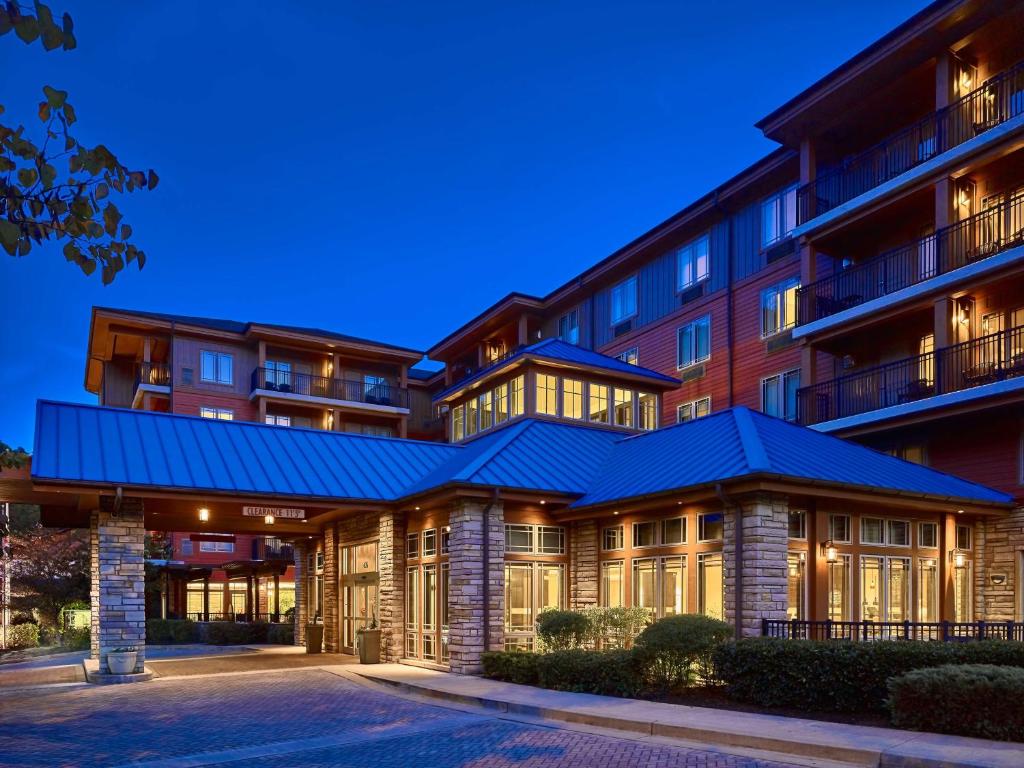
Hilton Garden Inn Gatlinburg
This pet-friendly, smoke-free hotel features free WiFi, an indoor pool and hot tub, on-site dining at the Garden Grille with a bar and happy hour, a fitness center, family-friendly amenities like in-room microwaves and refrigerators, free parking (including accessible options), cooked-to-order breakfast, a business center with over 1,100 sq ft of meeting space, laundry facilities, and convenient access to golf, tennis, hiking, and skiing, all in a five-story building built in 2009 with extensive accessibility features throughout.
Book Now
Historic Rocky Waters Inn
Newly remodeled in 2024, Historic Rocky Waters Inn, A Small Luxury Hotel offers upscale comfort just steps from Ripley’s Aquarium of the Smokies, Anakeesta, and SkyPark. This boutique retreat blends modern elegance with Gatlinburg charm, featuring a scenic terrace, outdoor entertainment space, and a cozy bar. Guests can enjoy breakfast or dinner at the on-site restaurant, The Heirloom Room, and stay connected with free in-room WiFi. Additional perks include free self-parking, concierge service, and express check-in/check-out for added convenience. Each guestroom is thoughtfully designed with premium bedding, air conditioning, and bathrobes, plus modern touches like 50-inch flat-screen TVs, workspaces, and balconies. With glowing reviews for its walkable location and attentive service, this small luxury stay is perfect for travelers seeking both style and substance in the Smokies.
Check Availability
Margaritaville Resort
Conveniently situated in the Gatlinburg part of Gatlinburg (TN), this property puts you close to attractions and interesting dining options. This 4-star property is packed with in-house facilities to improve the quality and joy of your stay.
Buy Now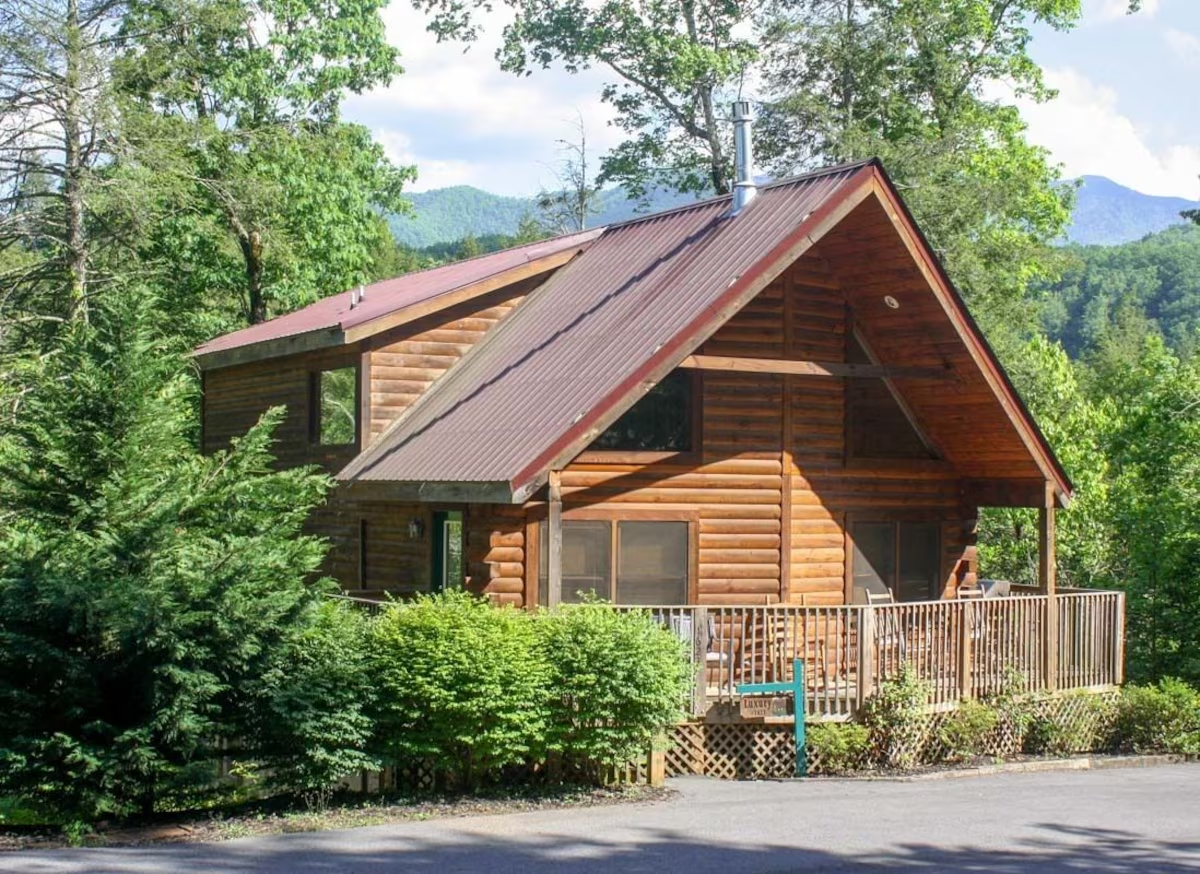
Mountain Shadow Resort & Rentals
Experience rustic luxury in the heart of the Smokies at Mountain Shadows Resort Rentals, where charming log cabins meet modern convenience. Whether you're planning a romantic honeymoon or a lively family reunion, this resort offers spacious accommodations complete with hot tubs, fireplaces, fully equipped kitchens, game rooms, and even gas/electric grills for cookouts under the stars. Guests can enjoy on-site amenities like a seasonal swimming pool, children’s playground, free high-speed WiFi, and pet-friendly options—making it easy for everyone to feel at home. Nestled adjacent to the Great Smoky Mountains National Park and conveniently located near the Gatlinburg trolley line, you're never far from scenic hikes, mountain views, and local attractions. While the resort holds an average rating of 3.1, many guests appreciate its peaceful setting and unique log-home atmosphere. With family rooms, non-smoking options, and features like whirlpool tubs and fireplaces, Mountain Shadows Resort invites you to unwind, explore, and make lasting memories in one of Gatlinburg’s most scenic spots.
Buy Now
River Edge Inn
Conveniently located near the Gatlinburg Convention Center, Gatlinburg Space Needle, and Ripley's Believe It or Not Museum, River Edge Inn offers a welcoming stay just steps from the action. Guests can start their day with a complimentary to-go breakfast, relax on the terrace, or unwind by the cozy lobby fireplace. The hotel features a seasonal outdoor pool and children’s pool with sun loungers, as well as a snack bar/deli, free self-parking, and high-speed in-room WiFi (50+ Mbps). Each guestroom is equipped with premium bedding, air conditioning, a private balcony, and essentials like a microwave, refrigerator, and 32-inch TV with premium channels. Families will appreciate extras like hypoallergenic bedding and available cribs, while guest reviews consistently praise the helpful staff and clean, comfortable rooms. Whether you're here for business or a mountain getaway, River Edge Inn delivers easy comfort in a prime downtown location.
Buy Now
River Terrace Resort and Convention Center
Just steps from Ripley’s Aquarium of the Smokies, Anakeesta, and SkyPark, River Terrace Resort & Convention Center offers comfort, convenience, and a touch of Southern hospitality in the heart of Gatlinburg. Guests enjoy a complimentary to-go breakfast each morning and can take advantage of an outdoor pool, free self-parking, and practical amenities like laundry facilities and a business center. The resort also offers concierge service, tour assistance, and express check-out to make your stay hassle-free. Each of the 205 rooms is equipped with air conditioning, flat-screen TVs, in-room safes, and free WiFi, along with bathrooms that feature hydromassage showers or tubs. With high marks for its friendly staff and central location, River Terrace is an ideal base for exploring the Smokies or attending events downtown.
Buy Now
Sidney James Mountain Lodge
Set against the scenic backdrop of the Smoky Mountains, Sidney James Mountain Lodge offers a warm, family-friendly retreat just minutes from Gatlinburg’s top attractions. Guests enjoy free WiFi, cozy rooms with flat-screen TVs, in-room coffee, air conditioning, and private balconies in select accommodations. Relax in style with access to three outdoor pools, a serene indoor pool, a kids' pool, and a soothing sauna—perfect after a day of exploring. On-site free parking adds convenience, while the Poolside Café, serving breakfast and lunch, makes grabbing a bite easy. Located near beloved local art galleries like Fowler’s Clay Works and the Great Smoky Arts & Crafts Community, Sidney James is more than just a place to stay—it’s a gateway to the charm and adventure of Gatlinburg. Pet-friendly and offering a variety of room types including suites, it’s a comfortable, value-rich option for families, couples, and explorers alike.
Book Now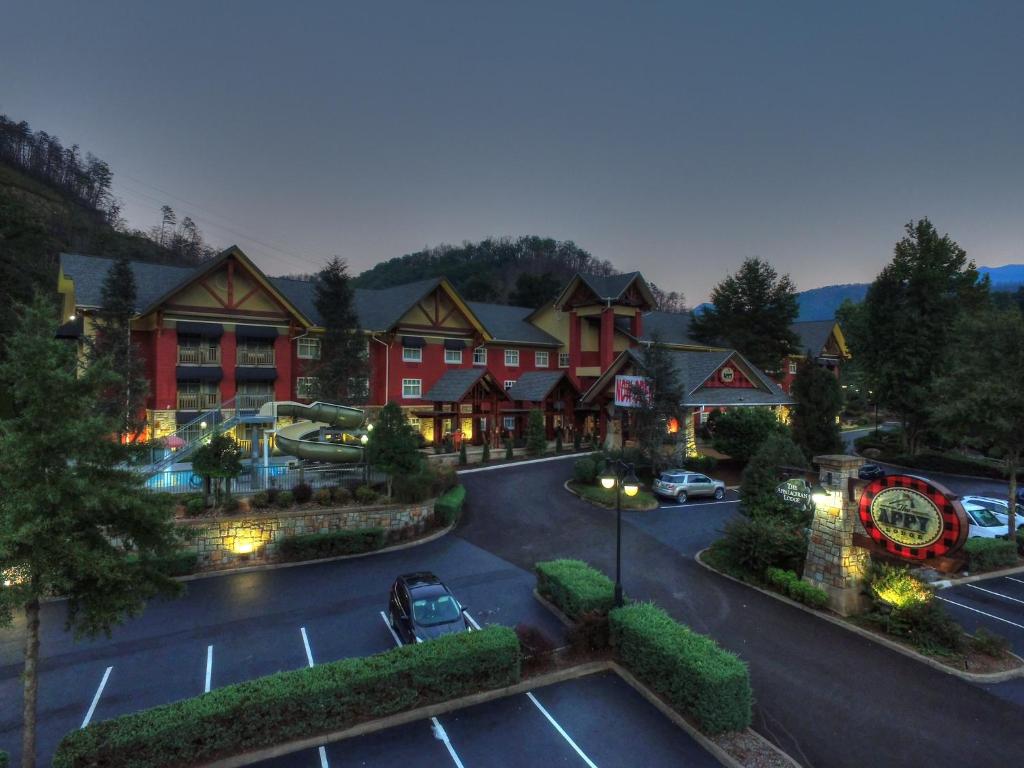
The Appy Lodge
Just a short distance from Anakeesta, Ripley’s Aquarium of the Smokies, and Ole Smoky Moonshine Distillery, The Appy Lodge offers a charming blend of comfort and convenience in the heart of Gatlinburg. Guests can unwind in the hot tub, enjoy a swim in either the seasonal outdoor pool or indoor pool, and stay active at the on-site gym. The hotel also features a terrace, business center, gift shop, and free self-parking. Each of the 101 rooms is designed with guest comfort in mind, offering premium bedding, air conditioning, free WiFi, and thoughtful amenities like flat-screen TVs, mini fridges, and microwaves. With laundry facilities, 24-hour front desk service, and tour assistance available, The Appy Lodge delivers a relaxed, welcoming stay just minutes from the area’s top attractions.
Buy Now
The Park Vista
Rising above downtown Gatlinburg on Cherokee Orchard Road, The Park Vista offers a quieter hillside stay with sweeping city and Smoky Mountain views. Families can enjoy the multi-level indoor pool complex with waterslides, a children’s area, and whirlpool, while several on-site dining options make breakfast, coffee, drinks, and relaxed evening meals convenient. Guest rooms include king, two-queen, and double-king configurations, with select rooms offering balconies and designated mountain or city views. Complimentary Wi-Fi, Hilton Honors benefits, connecting-room options, and a free Gatlinburg trolley stop at the hotel add practical value. Breakfast and self-parking cost extra, so compare the complete rate before booking. With its distinctive circular tower, full-service amenities, and separation from the Parkway crowds, The Park Vista is especially well suited to families, couples, and national park visitors who value scenery over immediate downtown walkability.
Check Availability Now
Greystone Lodge on the River
Set beside the river in the heart of downtown Gatlinburg, Greystone Lodge on the River offers an exceptionally convenient base beside Ripley’s Aquarium of the Smokies and just across the Parkway from Anakeesta. Guests receive complimentary breakfast, free self-parking, free Wi-Fi, and access to a seasonal heated outdoor pool with a waterslide. Every room includes a balcony or ground-floor patio, while selected riverfront rooms and suites add water views, fireplaces, soaking tubs, or family-friendly sleeping arrangements. A trolley stop at the hotel entrance provides another easy way to explore town. Greystone does not offer an indoor pool, spa, or on-site restaurant, and not every room overlooks the river, so check the exact room category before booking. With its walkable location, included essentials, and relaxed riverfront setting, Greystone is especially well suited to families, couples, and first-time visitors who want to leave the car parked and spend their holiday exploring Gatlinburg.
Check Availability Now
Embassy Suites by Hilton Gatlinburg Resort
Set less than half a mile from downtown Gatlinburg, Embassy Suites by Hilton Gatlinburg Resort offers a modern, family-focused stay near the Great Smoky Mountains National Park. Guests receive complimentary made-to-order breakfast, free Wi-Fi, and access to the nightly Evening Reception. Spacious accommodations, an indoor pool, and a seasonal outdoor pool complex with a lazy river and waterslide make the resort particularly appealing to families planning a multi-night stay. An on-site restaurant, bar, fitness centre, and pet-friendly rooms add further convenience. Embassy Suites is not directly on the Parkway, however, and the uphill return from downtown may prove tiring for young children or travellers with limited mobility. On-site self-parking also carries a nightly charge, while the lazy river and waterslide are seasonal. With its additional living space, included breakfast, and unusually strong pool facilities, Embassy Suites is best suited to families and larger groups who will use the amenities enough to justify the higher total price.
Check Availability Now
Old Creek Lodge
Set along a mountain stream on River Road, Old Creek Lodge offers a comfortable base between downtown Gatlinburg and the entrance to Great Smoky Mountains National Park. Every room includes a private stream-facing balcony, gas fireplace, mini-refrigerator, microwave, and Keurig coffee maker, giving the property more character and practicality than a typical downtown hotel. Guests also receive complimentary continental breakfast, free Wi-Fi, free on-site parking, and access to a heated seasonal outdoor pool. The western Parkway, Ober Mountain Aerial Tramway, and several restaurants and attractions are within walking distance, although destinations near Ripley’s Aquarium and Anakeesta require a longer stroll. Old Creek Lodge does not offer an indoor pool, restaurant, bar, spa, or extensive resort facilities, and pets are not permitted. Whirlpool tubs are available only in selected Spa room categories. With its creekside balconies, fireplaces, convenient location, and consistently strong guest feedback for cleanliness and service, Old Creek Lodge is particularly well suited to couples, small families, and park-focused travelers who prefer room atmosphere and walkability over resort-style extras.
Check Availability Now
The Historic Gatlinburg Inn
Set directly on the Parkway in the heart of downtown, The Historic Gatlinburg Inn offers a characterful base beside Gatlinburg SkyPark and across from the Gatlinburg Space Needle. Guests receive a complimentary Southern hot breakfast, free Wi-Fi, free on-site parking, and access to a seasonal outdoor pool, along with inviting common areas featuring fireplaces, historic photographs, puzzles, and porch rocking chairs. Room layouts vary considerably, with options ranging from traditional standard rooms to corner rooms with wraparound balconies, family suites, parlor arrangements, Presidential Suites, and Room 388, where “Rocky Top” was written. Standard rooms do not automatically include a mini-refrigerator, microwave, or balcony, so guests should confirm the exact category before booking. The inn does not offer an indoor pool, hot tub, spa, fitness centre, full-service restaurant, or bar, and pets are not permitted. With its exceptional walkability, included parking and breakfast, authentic Gatlinburg history, and frequently praised hospitality, The Historic Gatlinburg Inn is particularly well suited to couples, families, music enthusiasts, and repeat visitors who value independent character over modern resort-style amenities.
Check Availability Now
Hilton Garden Inn Gatlinburg
Set on River Road just off the busier Parkway, Hilton Garden Inn Gatlinburg offers a comfortable, walkable base near downtown and the Great Smoky Mountains. Rooms include microwaves, mini-refrigerators, and coffee makers, while selected categories add balconies, fireplaces, whirlpool tubs, or additional suite space. Guests also have access to an indoor saltwater pool, outdoor hot tub, courtyard fire pit, fitness center, and The Garden Grille & Bar. The hotel welcomes pets for an additional fee and participates in Hilton Honors. Breakfast is available but generally not complimentary, and on-site self-parking currently costs extra. It is best suited to couples and families who value dependable branded comfort and a slightly quieter downtown location.
Check Availability Now
Hampton Inn Gatlinburg
Set along LeConte Creek at 967 Parkway, Hampton Inn Gatlinburg offers a convenient downtown base near restaurants, attractions, and the Great Smoky Mountains. Rooms include mini-refrigerators, microwaves, and coffee makers, while selected categories add private balconies, creek views, or fireplaces. Guests also have access to complimentary hot breakfast, free Wi-Fi, an outdoor pool, hot tub, and fitness center. The hotel welcomes dogs and cats for an additional fee and participates in Hilton Honors. Covered parking is available, although on-site self-parking currently costs extra. It is best suited to couples, families, pet owners, and park visitors who value excellent Parkway walkability and a creek-side setting more than extensive resort-style amenities.
Check Availability Now
Hotel Indigo
Hotel Indigo Gatlinburg Downtown brings a more modern, boutique feel to the edge of downtown, with 136 rooms and a location that keeps restaurants and attractions within walking distance. Its standout feature is the seasonal heated rooftop infinity pool, joined by mountain views, a pool bar, and Altitude Restaurant & Rooftop Bar. Guests also have a lobby café serving Starbucks, fitness center, free Wi-Fi, EV charging, and dog-friendly accommodations. Self-parking currently costs $15 per day, and the rooftop pool operates seasonally from April 15 through October 31. It is best suited to couples and short-stay visitors who value walkability, contemporary rooms, and a rooftop atmosphere over the extra space and privacy of a cabin.
Check Availability Now


The best lodging choice ultimately depends on the trip you’re trying to have. Hikers often appreciate the quieter East Parkway corridor. View seekers gravitate toward Chalet Village. First-time visitors frequently find that staying near the south end of downtown provides the easiest balance between outdoor activities and everything else Gatlinburg offers.
For a deeper look at cabins, hotels, resorts, mountain-view properties, and the best lodging options for every type of traveler, explore our guide to Where to Stay in Gatlinburg.
Outdoor Activities by Season
The Smokies reward repeat visits because the mountains change dramatically throughout the year.
A trail that feels cool and shaded in July may be lined with wildflowers in April. A scenic drive that takes an hour in January can take half a day during peak fall color. Even the wildlife behaves differently from season to season.
If you’re planning a trip around outdoor activities, it helps to understand what each season does best.
Spring
Spring is the season that surprises many first-time visitors.
While much of the country is still waiting for warmer weather, the lower elevations of the Smokies begin filling with wildflowers. The park’s nickname as the “Wildflower National Park” quickly starts to make sense when trilliums, phlox, violets, and countless other blooms emerge across the forest floor.
One of the highlights of the season is the annual Spring Wildflower Pilgrimage, a long-running event that brings botanists, photographers, naturalists, and outdoor enthusiasts to the park for guided walks and educational programs.
Spring is also one of the best times for waterfall lovers. Seasonal rainfall and snowmelt help create some of the strongest flows of the year, making destinations such as Rainbow Falls, Grotto Falls, and countless smaller cascades especially impressive.
What I enjoy most about spring is the hiking weather. Temperatures are often cool enough for longer trails, yet warm enough to spend full days outdoors comfortably.
The main challenge is variability. It’s not unusual to experience sunshine, mist, and rain showers all within the same afternoon.
For wildflower season, waterfall hikes, and spring-specific activities, explore our guide to Things To Do In Gatlinburg in Spring.
Summer
Summer brings the longest days and some of the park’s most famous seasonal experiences.
The extended daylight allows visitors to fit more into a single day, whether that means hiking in the morning, exploring town in the afternoon, and catching a mountain sunset in the evening.
The smartest summer strategy is often elevation.
While downtown Gatlinburg can become warm and humid, higher elevations along Newfound Gap Road, the Appalachian Trail corridor, and Kuwohi frequently remain noticeably cooler. On particularly hot afternoons, heading higher into the mountains can make a remarkable difference.
Early summer also brings one of the park’s most unusual natural events: the synchronous fireflies at Elkmont. For a brief period in late spring and early summer, thousands of fireflies flash in coordinated patterns. Demand is so high that access is controlled through a National Park Service lottery system.
Visitors planning a trip to Cades Cove should also note an important seasonal change. From May through September, the loop road is closed to motor vehicles every Wednesday, creating a unique opportunity for cyclists and pedestrians to experience the valley without traffic.
For warm-weather adventures, family activities, and summer planning tips, visit our guide to Things To Do In Gatlinburg in Summer.
Fall
If your goal is classic Smoky Mountain scenery, fall is difficult to beat.
Beginning at the highest elevations in late September and gradually working its way down the mountains through October and early November, autumn transforms the landscape into layers of gold, orange, scarlet, and deep red.
The scenery attracts visitors from across the country, which creates one unavoidable reality: traffic.
Popular routes such as Newfound Gap Road, Roaring Fork Motor Nature Trail, and Cades Cove can become significantly busier during peak foliage periods. A scenic drive that might take an hour during quieter months can require much more time during October.
The solution isn’t avoiding these places. It’s adjusting your schedule.
Visitors who arrive early in the morning often enjoy the same views with a fraction of the congestion. Weekdays also tend to provide a more relaxed experience than weekends during peak color season.
For photographers, scenic drivers, and leaf-peepers, few times of year are more rewarding.
For foliage forecasts, seasonal attractions, and fall travel planning, see our guide to Things To Do In Gatlinburg in Fall.
Winter
Winter remains one of the most underrated seasons in the Smokies.
Without leaves covering the mountainsides, long-range views often become even more impressive than they are during summer. Ridge after ridge becomes visible across the landscape, creating some of the clearest vistas of the year.
The season also brings noticeably lighter visitation. Popular overlooks, trails, and scenic drives often feel calmer and less crowded than they do during spring, summer, and fall.
Winter does require a bit more flexibility.
The road to Kuwohi closes seasonally, typically from December through March, and weather conditions can occasionally affect travel along Newfound Gap Road. Before heading into higher elevations, it’s always worth checking current park conditions.
For hikers willing to dress for cooler temperatures, winter can reveal a side of the Smokies many visitors never see. Frozen waterfalls, quiet forests, and unobstructed mountain views create a very different experience from the busy summer months.
For holiday activities, winter scenery, and seasonal outdoor adventures, explore our guide to Things To Do In Gatlinburg in Winter.
Common Outdoor Mistakes First-Time Visitors Make
One advantage of learning from other travelers’ mistakes is that you don’t have to make them yourself.
Most disappointing days in the Smokies aren’t caused by bad weather or closed roads. They’re usually the result of simple planning mistakes that seem minor in the morning but become major frustrations by afternoon.
Fortunately, most of them are easy to avoid.
Starting Too Late
The Smokies reward early starts.
Many first-time visitors leave their hotel after breakfast and assume they’ll have plenty of time to reach their destination. What they discover is that thousands of other visitors had the same idea.
Popular trailheads such as Alum Cave, Rainbow Falls, and Kuwohi often begin filling early, particularly during summer and fall. Scenic drives become busier as the morning progresses, and wildlife viewing opportunities tend to decline as temperatures rise and crowds increase.
I’ve found that arriving at a trailhead at 7:30 AM can feel like visiting an entirely different park than arriving at 10:00 AM.
The parking is easier, the trails are quieter, and the overall experience is often more enjoyable.
If you’re debating whether to start early, start earlier.
You’ll rarely regret it.
Underestimating Parking Challenges
Many visitors assume that because Great Smoky Mountains National Park covers more than half a million acres, parking will be plentiful.
The reality is that most people are heading to the same handful of trailheads, overlooks, and scenic destinations.
Parking pressure is common at places such as Alum Cave, Rainbow Falls, Newfound Gap, and Cades Cove during peak travel periods.
Visitors should also remember that parking inside the national park generally requires a valid Park It Forward parking tag when leaving a vehicle parked for more than fifteen minutes. Purchasing one ahead of time can save unnecessary delays on the morning of your hike.
One mistake worth avoiding is roadside improvisation.
When official lots are full, some visitors attempt to squeeze vehicles onto narrow shoulders or partially off the roadway. Rangers actively enforce parking regulations, and improperly parked vehicles can receive citations or create safety hazards for other drivers.
If your preferred lot is full, it’s usually better to adjust your plans than force a parking solution.
Ignoring Mountain Weather
The weather forecast you see in downtown Gatlinburg may have very little resemblance to conditions higher in the mountains.
A pleasant morning near the Parkway can quickly become cool, windy, and foggy at Newfound Gap or Kuwohi. Summer thunderstorms can develop with little warning, and temperatures at higher elevations are often noticeably cooler than those in town.
One thing many first-time visitors underestimate is how quickly conditions can change.
A lightweight rain jacket and an extra layer of clothing take up very little space but can make a tremendous difference if weather shifts unexpectedly.
Footwear matters too.
The Smokies are famous for waterfalls, streams, and damp forest trails. Even relatively moderate hikes often include wet roots, slick rocks, and uneven terrain. Comfortable hiking shoes or trail runners are usually a far better choice than sandals, flip-flops, or smooth-soled casual shoes.
A little preparation makes the mountains far more enjoyable.
Trying to Do Too Much in One Day
This may be the most common mistake of all.
Visitors often build itineraries that look perfectly reasonable on paper. A morning in Cades Cove, a hike after lunch, an afternoon attraction, dinner reservations, and sunset photography all seem achievable when planning from home.
The Smokies have a way of changing those plans.
A black bear appears near the road in Cades Cove and traffic comes to a complete stop. A scenic overlook turns into a thirty-minute photo opportunity. A hike takes longer than expected. Afternoon traffic slows the return to town.
Locals even have a name for one of these delays: the bear jam.
When wildlife appears near the roadway, particularly in Cades Cove, traffic can slow dramatically or stop altogether as visitors pull into overlooks and viewing areas. What looks like a short scenic drive can easily consume much more of the day than anticipated.
I’ve found that the most enjoyable Smoky Mountain itineraries usually focus on one major outdoor activity rather than several. Choose the hike. Choose the scenic drive. Choose the wildlife excursion. Then leave room for the unexpected discoveries that make the Smokies memorable.
Forgetting to Download Maps Before Entering the Park
One final mistake catches more first-time visitors than almost any other. Cell service becomes increasingly unreliable in many areas of Great Smoky Mountains National Park. Visitors who rely entirely on mobile navigation are often surprised when maps stop loading, directions disappear, or communication with the rest of their group becomes difficult. Before leaving your hotel, download offline maps for the Gatlinburg and national park area or take screenshots of important routes and trailhead information. It’s a simple step that can save a great deal of frustration later in the day. The Smokies feel wonderfully remote in many places. Your phone will occasionally remind you just how remote they really are.
Plan Your Smoky Mountain Adventure
One of the easiest ways to enjoy the Smokies is to stop thinking about how much you can fit into a day and start thinking about how much you can realistically experience.
Many first-time visitors create ambitious itineraries that look perfect at home but quickly unravel once traffic, weather, trail conditions, wildlife sightings, and mountain roads enter the equation.
The Smokies reward focus.
Rather than crisscrossing the region multiple times a day, I recommend building each day around a specific area of the park and exploring it thoroughly.
One-Day Smoky Mountain Outdoor Adventure
If you only have a single day, focus on the Newfound Gap corridor.
Start with an early breakfast at Log Cabin Pancake House and have your Park It Forward parking tag already purchased before leaving your hotel. The earlier you enter the park, the easier the day becomes.
Spend the morning driving Newfound Gap Road, stopping at overlooks such as Morton Overlook and Newfound Gap itself. If weather and seasonal road conditions cooperate, continue to Kuwohi for some of the most expansive views in the Smokies.
After descending from the higher elevations, enjoy a simpler outdoor experience rather than attempting a major hike. The Gatlinburg Trail provides an excellent opportunity to experience the national park without committing half the day to a strenuous climb.
Return to town in the late afternoon, clean up, and enjoy dinner at The Peddler Steakhouse or Cherokee Grill.
One day isn’t enough to see everything, but it is enough to understand why so many travelers return.
Weekend Outdoor Itinerary
With two days available, the smartest approach is to divide your time between the mountains and the valleys.
Day One: Newfound Gap and the High Country
Dedicate your first day to the higher elevations of the national park.
Drive Newfound Gap Road, explore the overlooks, and choose a hike that matches your fitness level. Visitors looking for a moderate challenge might consider Alum Cave, while others may prefer shorter walks and scenic viewpoints.
In the evening, head to Anakeesta or Gatlinburg SkyPark for a completely different perspective on the mountains.
Day Two: Cades Cove
Cades Cove deserves an entire day.
Many visitors underestimate how much time this valley requires. The drive from Gatlinburg, the 11-mile one-way loop, wildlife viewing opportunities, historic buildings, and occasional bear jams all add up quickly.
That’s perfectly fine.
Cades Cove is best enjoyed slowly.
Arrive as early as possible, explore the historic churches and cabins, spend time watching for wildlife, and allow the day to unfold naturally rather than trying to keep a strict schedule.
If you’re visiting between May and September, remember that Wednesdays are reserved for cyclists and pedestrians, creating a completely different experience than driving the loop by vehicle.
Three-Day Smoky Mountain Itinerary
Three days allows you to experience three very different sides of the Smokies without feeling rushed.
Day One: Newfound Gap Road and High-Elevation Views
Begin with the iconic drive through the heart of the park.
Explore Newfound Gap Road, visit Kuwohi if accessible, and spend time enjoying the panoramic views that make this corridor famous.
Choose one meaningful hike rather than several smaller stops. The goal is to experience the mountains, not simply check locations off a list.
Day Two: Cades Cove and the Western Smokies
Dedicate the entire day to Cades Cove.
Explore the historic structures, scenic pullouts, wildlife viewing areas, and open meadows. Bring patience, because the valley operates on its own timetable.
The reward is experiencing one of the most memorable landscapes in the national park.
Day Three: Greenbrier and Roaring Fork
Spend your final day exploring some of the quieter corners of the Smokies.
The Greenbrier area offers a completely different atmosphere than Newfound Gap or Cades Cove. Streams, historic sites, and lower visitor numbers create a more relaxed experience.
Later in the day, drive Roaring Fork Motor Nature Trail when open, stopping at the Noah “Bud” Ogle Farmstead and other historic locations along the route.
Finish your trip with an evening at Anakeesta, Ober Mountain, or Gatlinburg SkyPark. Watching the mountains settle into evening light provides a fitting conclusion to a Smoky Mountain adventure.
The common thread in all three itineraries is simple: focus each day on one section of the park. You’ll spend less time in traffic, more time outdoors, and leave with a far better understanding of what makes the Smokies special.
A Guidebook Can Save You Hours of Trial and Error
One of the biggest surprises for first-time visitors is how quickly simple decisions can consume valuable vacation time.
The Smokies aren’t difficult to explore, but they are large enough that a few wrong turns, poorly timed trail choices, or unrealistic driving plans can easily cost you half a day. I’ve watched travelers spend more time researching where to go next than actually enjoying the mountains around them.
A good guidebook helps eliminate much of that uncertainty.
Instead of guessing which trail matches your ability level, you can compare distances, elevation gains, parking realities, and seasonal considerations before leaving your hotel. That often means the difference between a rewarding morning hike and an exhausting afternoon that wasn’t what you expected.
The same principle applies to scenic drives. Routes such as Newfound Gap Road, Roaring Fork Motor Nature Trail, and Cades Cove all offer memorable experiences, but each requires a different amount of time and planning. Knowing those differences beforehand makes it easier to build a realistic itinerary.
Dining is another area where preparation pays off. Some restaurants are best suited for an early breakfast before a hike, while others work better after a full day outdoors. Understanding where restaurants are located in relation to the national park can help you avoid unnecessary driving and long waits during peak hours.
Wildlife viewing benefits from planning as well. Black bears, deer, wild turkey, and elk can often be spotted throughout the region, but timing and location matter. Knowing where animals are commonly seen—and when they are most active—can dramatically improve your chances of a memorable sighting while helping you follow safe viewing practices.
The Smokies reward preparation, not because they are difficult to visit, but because they offer so many possibilities. A well-researched guide can help you spend less time figuring things out and more time enjoying the mountains.

Gatlinburg Travel Guide 2025: Explore the Best Attractions, Outdoor Adventures, and Hidden Gems in the Heart of the Smoky Mountains
This Gatlinburg Travel Guide 2025 isn’t just a book—it’s a doorway to a life-changing adventure. Whether you’re drawn by the mountains, the history, or the people, Gatlinburg promises an experience that will stay with you long after you’ve left. Get ready to create unforgettable memories, and let this guide be your trusted companion along the way.
Buy Now
Start with One Trail, One Scenic Drive, and One Mountain View
The Smokies are far too large to experience in a single trip, and that’s part of their appeal.
Many first-time visitors arrive with a list of waterfalls, overlooks, scenic drives, wildlife areas, restaurants, and attractions they hope to fit into a few days. By the second afternoon, they often discover what locals have known for years: the mountains reward slowing down far more than rushing around.
A better approach is to keep things simple.
Choose one trail.
For some travelers, that might be the easy, riverside Gatlinburg Trail. It’s one of only two trails in the national park where leashed dogs are permitted, making it a popular choice for visitors traveling with pets. Others may prefer something more ambitious, such as Alum Cave Trail, where an early start is essential because parking often fills shortly after sunrise.
Choose one scenic drive.
Newfound Gap Road remains one of the best introductions to the Smokies. The road climbs from the forests surrounding Sugarlands Visitor Center to high-elevation overlooks that feel surprisingly remote despite being less than an hour from downtown Gatlinburg. If historic cabins, mountain streams, and quieter scenery appeal more than sweeping vistas, Roaring Fork Motor Nature Trail offers a completely different experience. Just remember that it is a narrow, one-way route that is typically closed during winter months.
Then choose one mountain view.
For many visitors, that view comes from Kuwohi, the highest point in Tennessee. The panoramic views are remarkable, but so is the change in temperature. Even during summer, conditions at over 6,600 feet can feel dramatically cooler than downtown Gatlinburg. Bringing an extra layer is often a wise decision.
Others may prefer the views from Anakeesta, Ober Mountain, or Gatlinburg SkyPark, where mountain scenery can be enjoyed without a lengthy drive into the national park.
The goal isn’t to choose the perfect trail, the perfect drive, or the perfect viewpoint.
The goal is simply to begin.
Once you’ve experienced your first overlook, your first mountain stream, or your first sunset across the ridges, planning the rest of the trip becomes much easier. You’ll quickly discover which parts of the Smokies appeal most to you.
If you’re still deciding how to fill the rest of your itinerary, our Things To Do In Gatlinburg guide explores additional attractions and activities throughout the area. Looking for the right base camp? Our Where to Stay in Gatlinburg guide breaks down the best areas for different travel styles and budgets. And when you’re ready to refuel after a day outdoors, our Gatlinburg Restaurants guide highlights some of the area’s most reliable places to eat.
Start with one trail, one scenic drive, and one mountain view.
There’s a good chance you’ll already be thinking about your next Smoky Mountain trip before this one is over.
