
When to go for spring wildflowers, fall color, and quieter days in the park

Great Smoky Mountains Vary By The Season
For a first trip to the Great Smoky Mountains, I’d circle the first two weeks of May. Give yourself two mornings and decide over breakfast which way to go. If clouds are sitting on the ridge, head for the valley. When the mountains come out, take the high road and leave yourself time to pull over.
If you’re coming for wildflowers, move your trip up to mid- or late April. For fall color, think October into early November. The upper slopes turn first, and the valleys have their moment later. Once you’ve picked your dates, our Great Smoky Mountains National Park guide can help you choose stops on either side of the park.
Best Times to Visit the Smokies at a Glance
| What you’re coming for | When to go | What to plan around |
| Spring wildflowers | April 15–30 | Start on lower trails, where flowers usually peak first. |
| A first visit | May 1–15 | Save your clearest morning for the high overlooks. |
| Elkmont’s synchronous fireflies | Usually late May to early June | Check the annual viewing dates and vehicle reservation lottery. |
| A family summer trip | First half of June | Hike in the morning, before afternoon storms typically build. |
| Cooler hiking weather | Mid- to late September | Go for the walk. Valley color usually comes later. |
| Fall color on higher slopes | Early to mid-October | Start high on Newfound Gap Road. |
| Fall color in the valleys | Mid-October to early November | Allow extra time for popular scenic loops. |
| A quieter winter trip | Late January to mid-February, midweek | Plan a valley outing near your park entrance. |
Spring in the Smokies — Mid-April Flowers and Early May Drives
April 15–30 for wildflowers
If you’re coming for wildflowers, I’d take two days in the second half of April. Start down low, where the spring bloom usually peaks in mid- to late April. Up on the highest slopes, spring is still a few weeks behind.
At Porters Creek in Greenbrier, the first mile and a half is good flower country. You can turn back whenever you like, which makes this a pleasant walk with someone who stops for every trillium. It’s also the trail I’d try if late March is the only time you can come. For a shorter outing, drive to Chimneys Picnic Area and walk the three-quarter-mile Cove Hardwood Nature Trail. A loop that short leaves plenty of time to see what’s blooming at your feet.
May 1–15 for a first visit
My favorite thing about putting a Smokies trip in early May is that you can leave a little blank space in the itinerary. If the ridge is hidden when you get up, take Little River Road to Cades Cove. The valley and its old farm buildings are worth a morning under a gray sky. When the forecast gives you a clear stretch, take Newfound Gap Road and continue up to Kuwohi if the road is open.
Keep a jacket in the car. The average May high is 79°F in Gatlinburg and 57°F at Kuwohi. Before leaving town, check the park’s road schedule and current conditions. That’s especially handy when the view from Kuwohi is the reason you’re making the drive.
When Cades Cove makes sense for a spring outing
I’d choose Cades Cove when the group wants different things from the morning. Someone can linger over flowers while the rest of you have a look at an old church or walk around a log cabin. Pick a few stops before you drive in. If you’re the one hoping to see what’s blooming, start with where to see spring wildflowers in Cades Cove so you know where to get out of the car.
Summer in the Smokies — Early June for Families, Mornings All Summer
The first half of June for a school-break trip
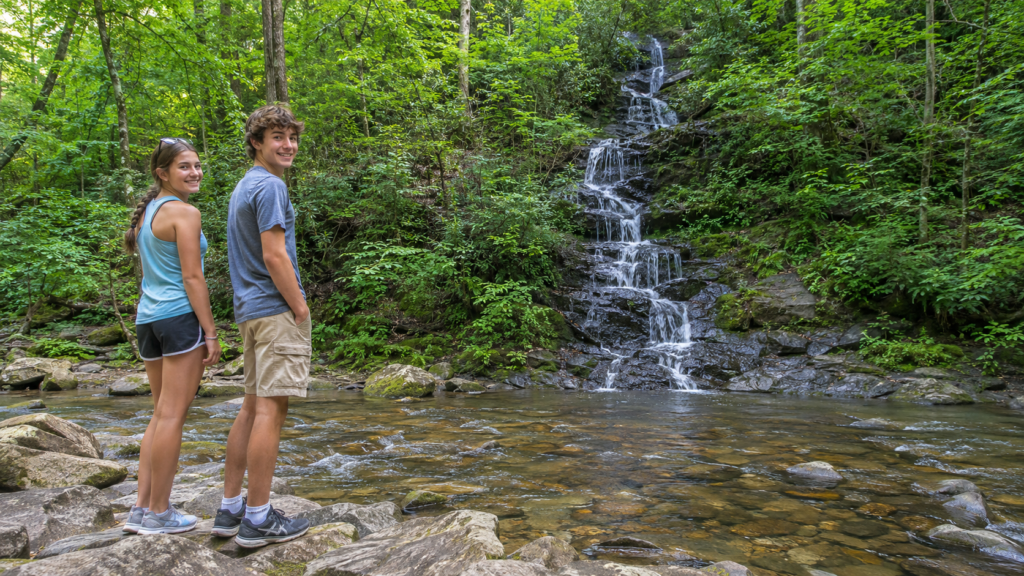
If school lets out early enough, I’d take the first half of June. From Gatlinburg, pick a clear morning for Kuwohi. The tower is only half a mile from the parking lot, but it’s uphill the whole way. Take your time. On a clear day, there’s a good payoff for all that climbing.
On the Bryson City side, I’d take the kids to Deep Creek. Tom Branch Falls is about a third of a mile in, and there’s a bench waiting for whoever’s ready to call that a hike. If everyone’s game for a second waterfall, continue to Indian Creek Falls for a 1.6-mile round trip.
How to plan a July or August day
In July or August, I’d give the morning to whatever brought you to the park. Walk to the overlook or take the longer hike while you’ve still got a good stretch of daylight ahead of you. By afternoon, the valleys can feel muggy, haze can blur the ridges, and thunderstorms are common. Keep the afternoon loose enough to change your mind over lunch.
A July day averages a high of 88°F in Gatlinburg and 65°F at Kuwohi. Toss a light layer in the car if you’re heading up. If you’d rather spend the morning pedaling past the old farmsteads in Cades Cove, check the park’s calendar for its vehicle-free Wednesdays. If your plan is to drive the loop and stop at a cabin or two, choose another day.
Late May into June for Elkmont’s fireflies
If seeing the fireflies flash together is the reason you’re making the trip, let Elkmont set the dates. The park usually holds its organized viewing in late May or early June, with a lottery for vehicle reservations. Check the park’s firefly page for that year’s dates and the entry deadline. I’d wait for the lottery result before booking a room around a particular night. If Elkmont is one outing among several, give yourself the freedom to go whenever the rest of the trip works.
Fall in the Smokies — Pick Your Dates by Elevation
Mid- to late September for hiking
If you’d rather spend your morning beside a creek than in a line of cars, I’d go in the second half of September. The weather is generally cooler and drier than in midsummer. You may see a little color high on the slopes, with plenty of green left down in the valleys.
In Tremont, take Middle Prong Trail to Lynn Camp Prong Cascades. It’s a 1.4-mile round trip along an old railroad bed. Give yourself time to sit by the water before heading back. Even if every tree is still green, you’ve picked a good morning to be out.
Early to mid-October for the higher slopes
Early to mid-October is when I’d take the high road. Color typically develops above about 4,000 feet then, so drive up Newfound Gap Road from Gatlinburg and pay attention as you climb. The woods can look decidedly summery near town. Farther up, yellow birches stand out against the dark evergreens, and you may find yourself pulling over sooner than you expected.
Leave time for a couple of pullouts on the way to the gap. If you wake up to clouds sitting on the ridge, spend the morning lower down and try again when the forecast gives you a clear spell. You’ve got a better chance of seeing the color if you can move the drive by a day.
Mid-October to early November for the valleys

From mid-October into early November, I’d spend a morning down low. At Roaring Fork Motor Nature Trail, just outside downtown Gatlinburg, the woods come right up to the road. Cades Cove is a different sort of drive. You look across open fields to the hillsides, and an old church or log cabin gives you a reason to get out and linger.
Pick whichever sounds like your morning and give it the time it deserves. October is the park’s busiest month, and a leisurely loop can get longer in a hurry. If traffic is already backing up, head for Foothills Parkway. There you can pull over and see several ridges at once, with room to take in the view.
How to choose if you only have one fall weekend
If the room is booked, check where the leaves are turning and choose your drive from there. If you can still move the trip, go earlier for the high slopes and later for the valleys. For an early-November weekend, I’d start low and check the seasonal road schedule before settling on a route.
Winter in the Smokies — When to Go and What You Can Still See
Late January to mid-February for a quieter trip
I’d take a couple of weekdays between late January and mid-February. Those are good months to see snow up high, but down in Gatlinburg you might get an afternoon warm enough to leave your coat unzipped. The average January high is 51°F in town and 35°F at Kuwohi. Give yourself a little time to poke around down low. With the leaves off the trees, you can see the shape of the hillsides and pick out old stonework you might walk right past in summer.
Which roads close for winter?
If you’re having breakfast in Gatlinburg and thinking about lunch in Cherokee, check the park’s current conditions before you order another cup of coffee. Newfound Gap Road is the way across the park, and snow or ice can close it even when the streets in town look fine. Little River Road and Cades Cove Loop Road also stay open year-round when the weather allows. Kuwohi Road and Roaring Fork Motor Nature Trail close for the winter. If the gap road is shut, I’d spend the day where I woke up and leave the long drive around the mountains for another time.
A winter day on either side of the park
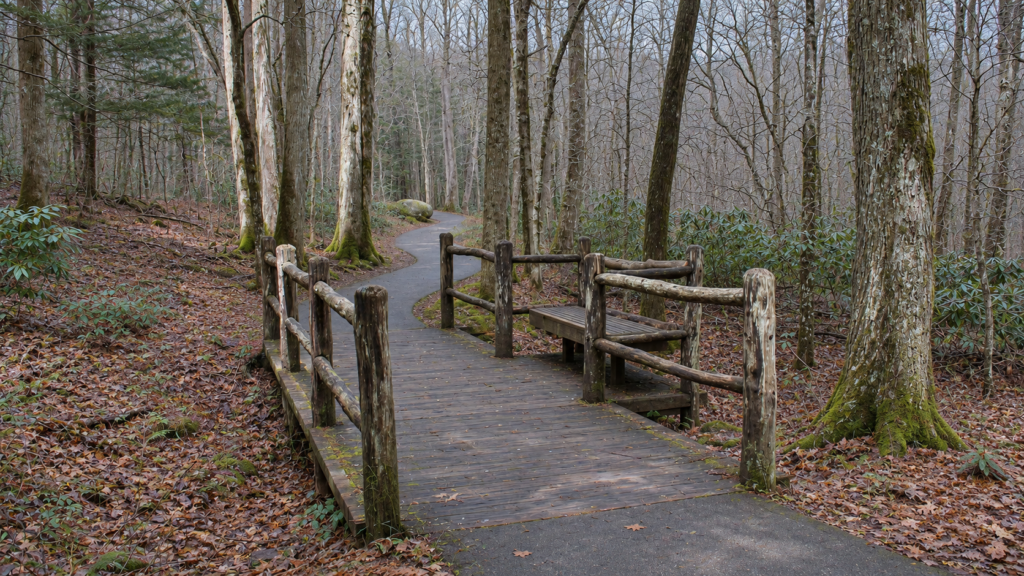
From Gatlinburg, take the half-mile paved loop at Sugarlands Valley Nature Trail. Stop at the old stone chimneys and picture what this patch of woods looked like when people lived here. If Little River Road and the loop are open, carry on to Cades Cove and pick a cabin or church to visit from our Cades Cove guide.
From Cherokee, start at the Mountain Farm Museum beside the Oconaluftee Visitor Center, then follow the river trail as far as you feel like walking. Either outing makes a good winter morning on its own. Save Newfound Gap for a clear day when the road is open.
What Time Should You Enter the Park?
Aim for 8 a.m. on busy days
On a busy October Saturday, I’d take my coffee in the car. The park recommends getting through the entrance by 8 a.m. and giving yourself an even earlier start for a popular trailhead. Eight at the park sign can still be a good way from eight at the trail.
If you’re in town for a few days, use the park’s congestion forecast to pick the quieter morning. And keep a second stop in mind along the same road. That way a full parking lot costs you a few minutes of driving.
When a 3 p.m. arrival works
If you get into Gatlinburg at three and there’s still daylight, I’d go straight to Sugarlands for the little walk to Cataract Falls. It’s seven-tenths of a mile round trip, a pleasant way to stretch your legs after the drive into town. Check sunset and road conditions before you set out. If you’ll be parked for more than 15 minutes, display a valid park parking tag. Then give yourself time to listen to the creek on the way back.