
From easy roadside pull-offs to mountaintop panoramas, these are the Smoky Mountain views worth building into your drive.
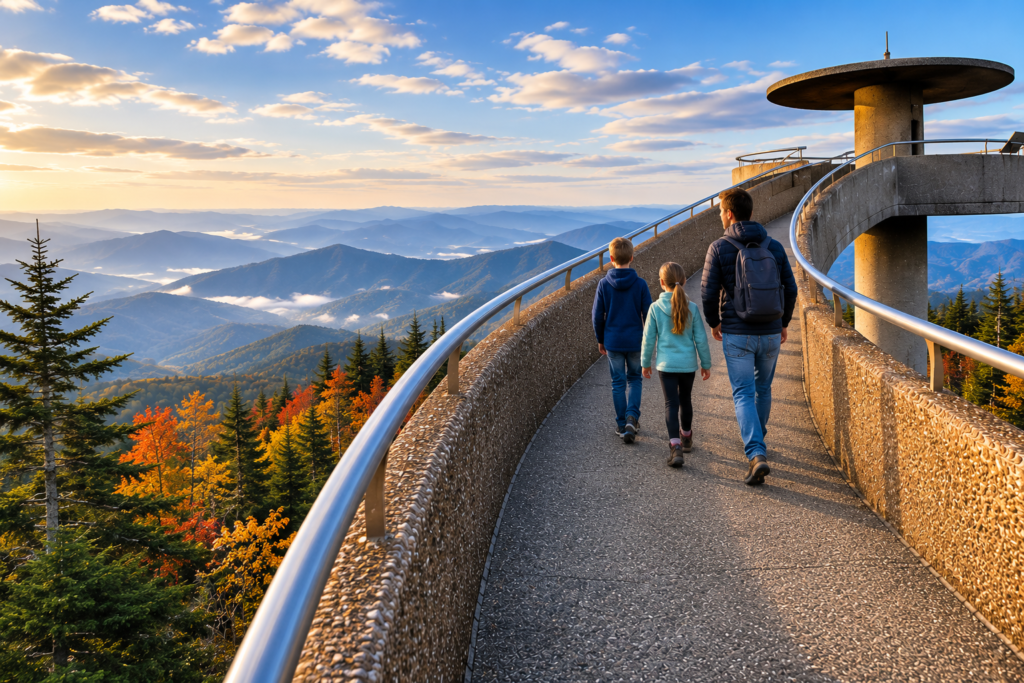
The Smokies Don’t Have One Best View
You can spend half a day hiking for a Smoky Mountain view, but you certainly don’t have to. Some of the views I keep coming back to are reached by pulling safely off Newfound Gap Road, walking a few yards, and giving yourself five minutes to actually look around.
The trick is not expecting the mountains to perform on schedule. I’ve reached Kuwohi under a lid of gray cloud and found it opening into blue ridges later the same morning. I’ve also left sunny Gatlinburg only to find the upper elevations buried in fog. Time of day, elevation, weather, and season can completely change which overlook is best.
This guide is meant to help you choose rather than collect overlooks. We’ll sort out which stops are genuinely worth your time, what you’ll see, where sunrise or sunset matters, and which viewpoints require some walking.
You don’t need every pull-off. A few well-chosen stops — with enough time to enjoy them — make a much better Smokies day.
Best Great Smoky Mountains Overlooks at a Glance
If you’re short on time, concentrate on Kuwohi, Morton Overlook, Newfound Gap, and either Look Rock or the Foothills Parkway. Those give you four quite different versions of the Smokies rather than four variations of the same roadside view.
For easier sightseeing, Newfound Gap and Carlos Campbell Overlook offer excellent scenery without much walking. Photographers should put Morton Overlook near the top of the list for sunset, while travelers willing to climb the paved path to Kuwohi’s observation tower get the broadest high-elevation panorama.
| Overlook | Best For | Walking Required | Best Time | Road/Area |
| Kuwohi | Biggest high-elevation panorama | Yes | Morning/clear days | Kuwohi Road |
| Morton Overlook | Sunset | No | Sunset | Newfound Gap Road |
| Newfound Gap | Classic Smokies experience | Minimal | Morning/late afternoon | US 441 |
| Carlos Campbell Overlook | Mountain layers | No | Morning | Newfound Gap Road |
| Chimney Tops Overlook | Dramatic peaks | No | Morning/afternoon | Newfound Gap Road |
| Oconaluftee Valley Overlook | Layered ridges/fall color | No | Morning | Newfound Gap Road |
| Webb Overlook | High-elevation scenery | No | Daylight | Newfound Gap Road |
| Look Rock | Wide western panorama | Short walk | Clear days/sunset | Foothills Parkway |
| Foothills Parkway Overlooks | Sunset/mountain layers | No | Late afternoon | Foothills Parkway |
| Cades Cove overlooks/pull-offs | Valley-and-mountain scenery | Minimal | Early/late | Cades Cove |
1. Kuwohi — Best Overall View in the Smokies
If I could send a first-time visitor to only one high-elevation viewpoint, I’d choose Kuwohi (formerly Clingmans Dome). At 6,643 feet, it’s the highest point in Great Smoky Mountains National Park, and on the right day the view explains better than any brochure why these mountains earned the word “Smoky.
What You’ll See
The parking area already gives you a substantial mountain panorama, so visitors with limited mobility can still enjoy the setting without tackling the climb to the tower. The observation tower, however, is where the landscape really opens. Ridge after ridge fades from green to blue to gray until you can’t quite tell where the mountains end.
Don’t plan your entire day around getting a crystal-clear photograph. Kuwohi makes its own weather. I’ve seen the upper mountain disappear into cloud while lower viewpoints remained beautifully clear. An hour later, the situation can reverse.
What You Need to Know
Kuwohi Road runs seven miles from Newfound Gap to the parking area. From there, reaching the observation tower requires a roughly half-mile paved climb. “Paved” sounds reassuring; “steep” is the word you’ll remember.
Parking gets competitive during busy periods, particularly on fall weekends and midday summer visits. Early morning is the more pleasant bet.
The temperature can also feel surprisingly different from downtown Gatlinburg, so carrying another layer isn’t overpacking. Kuwohi Road is seasonal; for 2026, the scheduled season is April 1 through November 29, weather permitting.
2. Morton Overlook — Best Sunset Overlook
Morton Overlook is where I’d send someone who said, “I want one classic Smoky Mountain sunset, and I don’t want to hike for it.” It sits along Newfound Gap Road and delivers the layered-ridge composition photographers come here hoping to find.
Why Morton Is Special
The view looks down a long mountain valley, with successive ridges stacking toward the horizon. Near sunset, those ridges often turn into progressively lighter silhouettes while the sky carries most of the color.
Fall makes the foreground especially interesting because the wooded slopes bring reds, golds, and oranges into a view that is otherwise dominated by distant blue mountains. But Morton works outside October, too. Summer haze can actually strengthen that layered effect.
The Catch
Parking is limited, and sunset isn’t exactly a secret here. If this view matters to you, arrive before the sun reaches the horizon rather than pulling up five minutes before sunset and expecting an empty space.
If the designated area is full, don’t improvise a parking spot along Newfound Gap Road. This is mountain highway traffic, not a photography studio.
For pictures, expose for the brighter sky rather than trying to brighten every ridge. Letting the foreground mountains become silhouettes usually produces a photograph closer to what makes Morton special in person.
3. Newfound Gap — Best Classic Smokies Overlook
Newfound Gap isn’t necessarily the most dramatic overlook in the park, but I’d still put it on nearly every first-timer’s itinerary. It combines a strong mountain view with one of those satisfying travel moments when geography suddenly becomes tangible: you’re standing directly on the Tennessee-North Carolina state line.
At 5,046 feet, you’re already high enough for expansive views and noticeably different weather from Gatlinburg. The Appalachian Trail crosses here, and there’s enough historical significance surrounding the site to make it more than another roadside turnout. You don’t need a history lecture to appreciate that generations of Smokies visitors have stopped at this same mountain pass.
The practical advantage is space. Compared with the smaller pull-offs along US 441, Newfound Gap has a substantial parking area and broad viewing spaces. That doesn’t mean parking is guaranteed on a busy October afternoon, but the stop is much easier to manage than tiny roadside overlooks.
It’s also an obvious addition to Scenic Drives in Great Smoky Mountains National Park if you’re traveling between Gatlinburg and Cherokee.
Who Should Stop Here?
Newfound Gap is particularly good for first-time visitors, families, and travelers who want high-elevation scenery without committing to a steep walk. If you’re already driving Newfound Gap Road, skipping it saves very little time.
4. Carlos Campbell Overlook — Best Big View Without a Hike
Carlos Campbell Overlook is one of those stops that rewards travelers who aren’t in such a hurry to reach Newfound Gap. Coming from Gatlinburg, it’s an easy roadside opportunity to step out, stretch your legs, and watch the Smokies begin opening beneath you.
The overlook includes north and south viewing areas, so think of it as more than one narrow turnout. The broad views take in forested mountains and valleys, and you can see how quickly the vegetation changes as Newfound Gap Road climbs from lower elevations toward the cooler upper slopes.
Morning is especially appealing when softer light and occasional valley mist give the ridges more separation. Late-day light can work nicely as well. In fall, the elevation makes this a useful place to see how color is moving through different levels of the mountains rather than judging the entire season by what you saw back in Gatlinburg.
There’s no meaningful hike involved, which is part of its appeal.
My only warning is simple: don’t race past it because Kuwohi has the bigger name. Carlos Campbell is one of the highest-return stops on this drive for the amount of effort required.

Gatlinburg Travel Guide 2025: Explore the Best Attractions, Outdoor Adventures, and Hidden Gems in the Heart of the Smoky Mountains
This Gatlinburg Travel Guide 2025 isn’t just a book—it’s a doorway to a life-changing adventure. Whether you’re drawn by the mountains, the history, or the people, Gatlinburg promises an experience that will stay with you long after you’ve left. Get ready to create unforgettable memories, and let this guide be your trusted companion along the way.
Buy Now
5. Chimney Tops Overlook — Best View of an Iconic Smokies Peak
Chimney Tops is one of those mountain shapes that gives the landscape some personality. Instead of another succession of rounded ridges, the distinctive rocky formation provides a clear focal point, making this stretch of Newfound Gap Road particularly rewarding when visibility is good.
There are roadside viewing opportunities in this area rather than one grand observation plaza. That suits the experience. Pull into a proper turnout, take a few minutes to study the peaks, and move along when you’re ready.
Autumn is especially attractive because the wooded slopes beneath the formation fill with color, while spring and summer offer the deep greens people associate with the Smokies. Morning through early afternoon usually gives you useful light without requiring the scheduling commitment of a dedicated sunset stop.
For travelers who want recognizable mountain scenery but aren’t interested in spending several hours hiking, this is an easy recommendation.
Don’t Confuse the Overlook With the Trail
Seeing Chimney Tops from Newfound Gap Road and hiking the Chimney Tops Trail are two completely different outings. The roadside view requires little physical effort; the trail is a separate mountain hike requiring time, preparation, and considerably more energy.
If your day is primarily about overlooks, enjoy the mountain from the road and keep moving.
6. Oconaluftee Valley Overlook — Best North Carolina-Side Mountain Layers
Oconaluftee Valley Overlook is a good argument for continuing past Newfound Gap rather than reaching the state line, taking a photograph, and immediately driving back to Gatlinburg.
On the North Carolina side of Newfound Gap Road, the view drops toward the Oconaluftee valley through a sequence of long, overlapping ridges. Instead of one dominant peak, you’re looking at the structure of the Smokies themselves — mountains folding behind mountains until distance washes away the details.
I especially like this kind of view in the morning. Mist settling between the ridges can make the landscape more interesting, not less. You don’t necessarily need flawless blue skies for a good photograph here. Low cloud can add depth as long as the entire viewpoint isn’t socked in.
Fall brings another advantage. Because you’re looking across substantial changes in elevation, different slopes may be at different stages of color on the same day.
The overlook is easily missed by Gatlinburg visitors simply because many treat Newfound Gap as their turnaround point. If you have time to continue toward Cherokee, it’s worth adding. You’re not committing to a hike or major detour — just finishing more of a road you’re already enjoying.
7. Webb Overlook — The Stop Most Drivers Rush Past
Webb Overlook is worth stopping for, but I wouldn’t build a day around it. That distinction matters when you’re deciding how to spend limited time in the Smokies.
Located along Newfound Gap Road, it offers the kind of high-elevation mountain and ridge scenery that makes US 441 such a good drive. The stop is straightforward, requires no real hiking commitment, and gives you another chance to catch the mountains under different light or weather conditions.
Its greatest value comes as part of a sequence. Combine Webb with Carlos Campbell, Chimney Tops, Newfound Gap, and the North Carolina-side viewpoints, and it becomes one more worthwhile chapter in the drive.
If your schedule is tight and you’ve already had excellent visibility at the larger overlooks, you won’t ruin your trip by passing Webb. If the light is good and there’s an easy parking space, though, pull in.
That’s how I treat the smaller Smokies overlooks: don’t chase every one, but don’t be so committed to an itinerary that you ignore a good view when the mountains hand you one.
8. Look Rock — Best Alternative to Kuwohi
Look Rock doesn’t receive the same attention as Kuwohi, which is one reason I enjoy recommending it. You’re seeing the Smokies from their western side, and the change in perspective makes the mountains feel fresh again rather than like another version of Newfound Gap Road.
The View
From Look Rock, the landscape spreads across Happy Valley toward the main Smokies, while the opposite direction opens toward the Tennessee Valley. That gives the viewpoint unusual range: rugged mountains on one side, lower country stretching away on the other.
The western location also makes Look Rock attractive when late-day light is good. On clear afternoons, distant ridges stack across the horizon; on hazier summer days, the view becomes softer but still worthwhile.
Getting to the View
Look Rock is reached from Foothills Parkway West, between the Walland area and Chilhowee Lake. The observation tower requires a short paved walk rather than the steeper climb you’ll face at Kuwohi.
This isn’t the overlook I’d choose if you’re staying in downtown Gatlinburg and have only two hours to spare. Getting there requires more commitment. But if your day already includes Townsend or Scenic Drives in Great Smoky Mountains National Park, the location makes much more sense.
That’s the tradeoff: Kuwohi gives you the park’s highest summit experience. Look Rock offers a quieter western perspective and a pleasant tower walk without funneling everyone toward the same famous destination.
9. Foothills Parkway — Best Road for Overlook Hopping
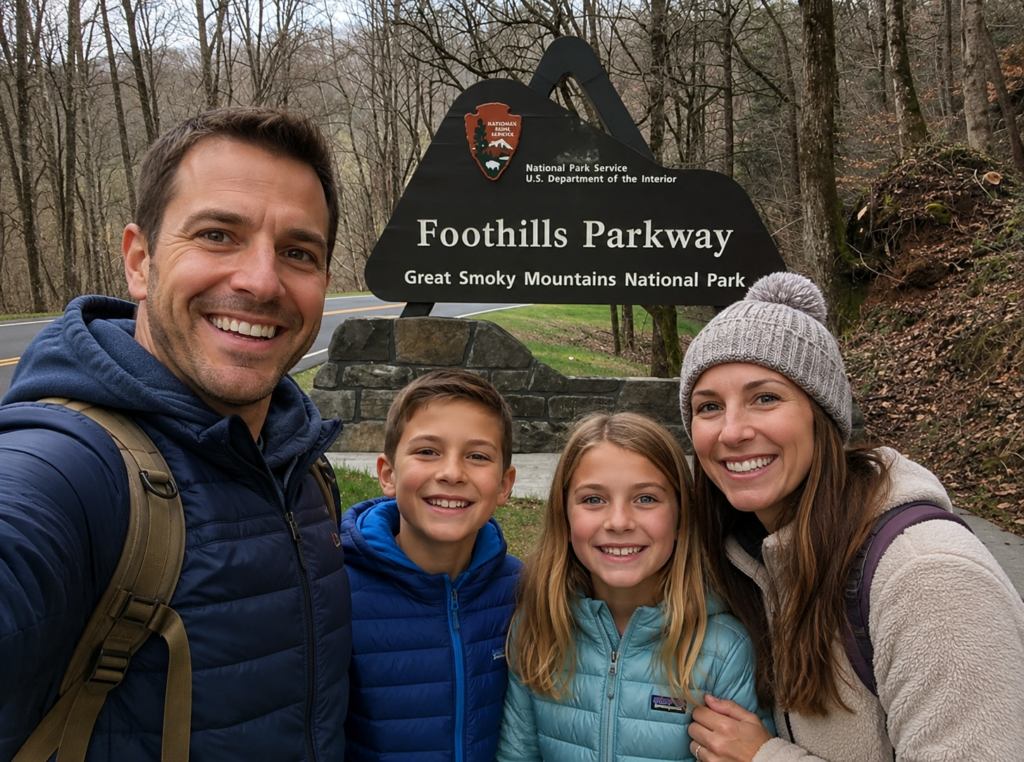
If Newfound Gap Road feels like a mountain crossing, Foothills Parkway feels more like a balcony. You’re traveling along the Tennessee side with long views toward the main spine of the Smokies rather than climbing directly through it.
That’s why I don’t recommend driving the Parkway with one specific overlook circled on a map. The pleasure comes from having multiple places to stop as the angle, weather, and light change.
Late afternoon is particularly good. With the sun dropping lower, folds in the terrain become more pronounced and the mountains develop that layered blue appearance people hope to photograph. Stay later and several viewpoints can work beautifully around sunset.
It’s also a good choice for travelers who enjoy scenery more than trophy collecting. There isn’t the same sense of “I must reach the famous summit.” You drive, stop when something catches your eye, take ten minutes instead of two, and continue.
Don’t Pick Just One Pull-Off
Treat Foothills Parkway itself as the destination. If one turnout is hazy or crowded, continue to the next. If another suddenly has tremendous light breaking through the clouds, that’s your stop.
That’s a more satisfying way to experience the Parkway than trying to rank every pull-off beforehand. For route logistics and the different Parkway sections, use the full scenic drives in the Great Smoky Mountains guide rather than trying to squeeze an entire driving guide into an overlook itinerary.
10. Cades Cove — Best Valley-and-Mountain Views
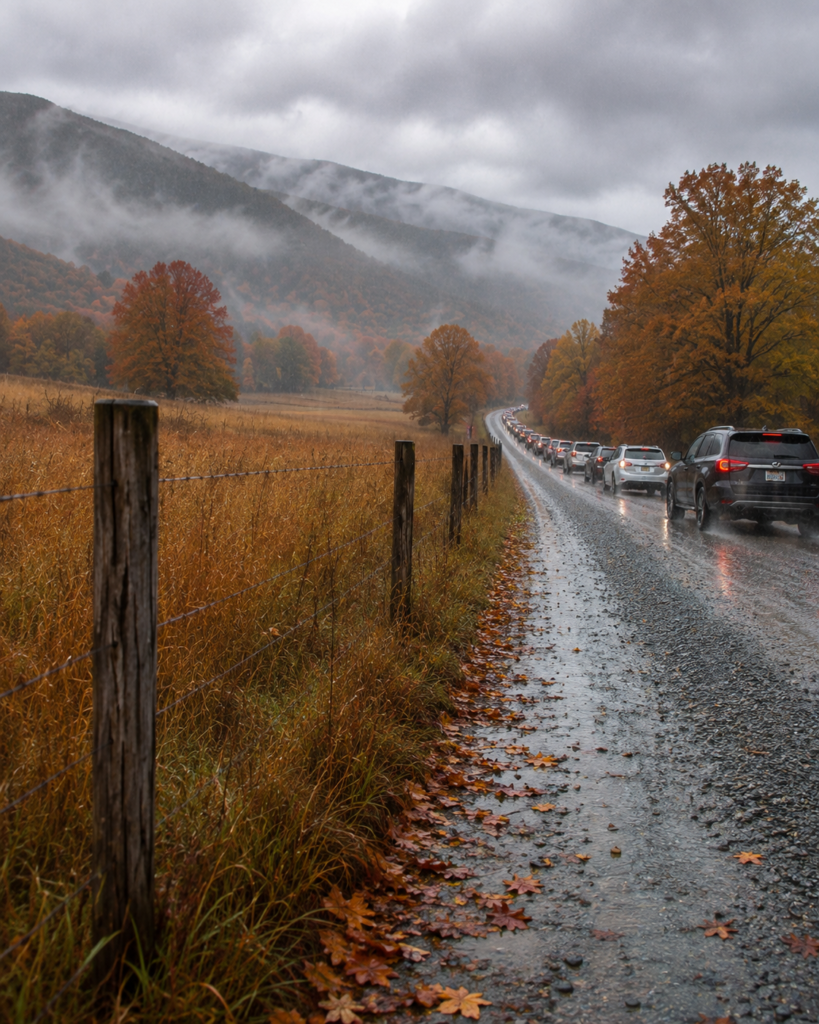
Cades Cove bends the definition of an “overlook.” You’re not standing high above the landscape looking down. You’re in the landscape, with a broad valley opening around you and mountain ridges forming the walls.
That’s precisely why I’ve placed it lower on this list rather than pretending it’s comparable to Kuwohi or Morton Overlook. If you’re chasing high-elevation panoramas, go elsewhere. If you want to understand the scale of the Smokies from the valley floor, Cades Cove is excellent.
Early morning can be memorable when mist hangs low across the fields and the surrounding ridges slowly emerge. Late afternoon brings warmer light and long shadows, particularly across the open portions of the loop.
Use the designated pull-offs and open viewing areas instead of stopping traffic whenever you spot a good photograph. The Cove already moves slowly enough.
Wildlife is another reason visitors love the area, but don’t make sightings the condition for enjoying your visit. You may see deer, turkeys, bears, or nothing more exotic than a distant bird. The valley-and-mountain scenery works regardless.
Cades Cove is best approached as a slow scenic experience, not a single overlook you check off in ten minutes.

Bearskin Lodge on the River
Tucked near the entrance of Great Smoky Mountains National Park and just minutes from the Gatlinburg Convention Center and Space Needle, Bearskin Lodge on the River offers a cozy, nature-inspired retreat with modern comforts. Guests can relax by the firepit, enjoy a workout in the gym, or float the day away in the seasonal outdoor pool featuring a lazy river. Complimentary perks include free self-parking, in-room WiFi, and coffee or tea in the inviting lobby. Each of the 96 rooms is designed for comfort with premium bedding, air conditioning, flat-screen TVs, and convenient extras like refrigerators, microwaves, and coffee makers. With helpful staff, tour assistance, and a location that blends peaceful riverside views with downtown access, Bearskin Lodge is a favorite for travelers looking to experience the Smokies in style and comfort.
Check Availability
Courtyard by Marriott Gatlinburg Downtown
Set just off the Parkway on Airport Road, Courtyard by Marriott Gatlinburg Downtown offers a modern, convenient base for travelers who want to explore downtown Gatlinburg largely on foot. The hotel features contemporary rooms and suites, including balcony options, along with an indoor swimming pool, outdoor hot tub, fire pit, fitness center, and The Bistro for breakfast, evening meals, and drinks. Its location is particularly convenient for the Gatlinburg Convention Center and provides walkable access to restaurants, shops, the Space Needle, Ober Mountain Aerial Tramway, and many downtown attractions. On-site self-parking currently costs $15 per day, and breakfast is not complimentary, so both should be considered when comparing the total cost with nearby hotels. Courtyard also offers less Smoky Mountain character than Gatlinburg’s historic, riverfront, and resort-style properties. With its combination of modern accommodations, useful indoor amenities, Marriott Bonvoy participation, and downtown walkability, Courtyard is especially well suited to families, couples, convention visitors, and first-time travelers who want the hotel to serve as a comfortable base for exploring Gatlinburg and Great Smoky Mountains National Park.
Check Availablity
Fairfield Inn & Suites by Marriott Gatlinburg Downtown
Just steps from Ripley’s Aquarium of the Smokies, Gatlinburg Convention Center, and the Space Needle, Fairfield Inn & Suites by Marriott Gatlinburg Downtown offers a bright and modern stay in the heart of the action. Guests can enjoy a complimentary continental breakfast each morning, relax in the seasonal outdoor pool or hot tub, and unwind on the terrace or by the lobby fireplace. The hotel also features a fitness center, luggage storage, and convenient dry cleaning services. All 98 guest rooms come with premium bedding, air conditioning, free WiFi, and thoughtful extras like refrigerators, microwaves, and 50-inch LED TVs. Families will appreciate free infant and extra beds, while eco-conscious guests can take comfort in the use of LED lighting and recycling amenities. With rave reviews for its clean rooms, friendly staff, and walkable location, this Marriott property is a standout choice for your next Smoky Mountain getaway.
Buy Now
Gatlinburg River Inn
Just steps from Anakeesta, Ripley’s Aquarium of the Smokies, and SkyPark, Gatlinburg River Inn offers a relaxing stay with thoughtful amenities and scenic comfort. Guests enjoy a complimentary continental breakfast each morning, along with access to a seasonal outdoor pool, children’s pool, and a riverside terrace complete with firepit and hot tub for winding down after a day of exploring. Free in-room WiFi, self-parking, and laundry facilities make your stay even more convenient. The 58 guest rooms feature balconies, mini-fridges, microwaves, and air conditioning, with clean, comfortable spaces that reviewers consistently praise. With a 24-hour front desk, vending machines, and a smoke-free setting, Gatlinburg River Inn is a well-rounded choice for both families and couples looking to stay close to the action in downtown Gatlinburg.
Buy Now
Gatlinburg Town Square By Exploria Resort
Gatlinburg Town Square by Exploria Resorts places you right where the action is, just a short 10-minute stroll from top attractions like the Gatlinburg Convention Center and the Space Needle. Whether you’re looking to stay active at the fitness center or make a splash in the indoor or seasonal outdoor pools, this eco-certified resort has you covered. Kids will love their own dedicated pool, while adults can relax and unwind in the hot tub. Guests frequently rave about the welcoming staff and prime location.
Buy Now
Hampton Inn Gatlinburg Historic Nature Trail
Set just uphill from downtown on Historic Nature Trail, Hampton Inn Gatlinburg Historic Nature Trail offers a quieter base while keeping the Parkway within walking distance. The recently renovated hotel includes complimentary hot breakfast, free Wi-Fi, a heated indoor pool, connecting rooms, pet-friendly accommodations, EV charging, and a relaxing outdoor fire-pit area. A Gatlinburg Trolley stop is right outside, while the Convention Center and W.L. Mills Conference Center are nearby. Self-parking currently costs $15 per day. It is best suited to families, couples, convention visitors, and travelers who want convenient access to both downtown Gatlinburg and Great Smoky Mountains National Park without staying directly on the Parkway.
Check Availability Now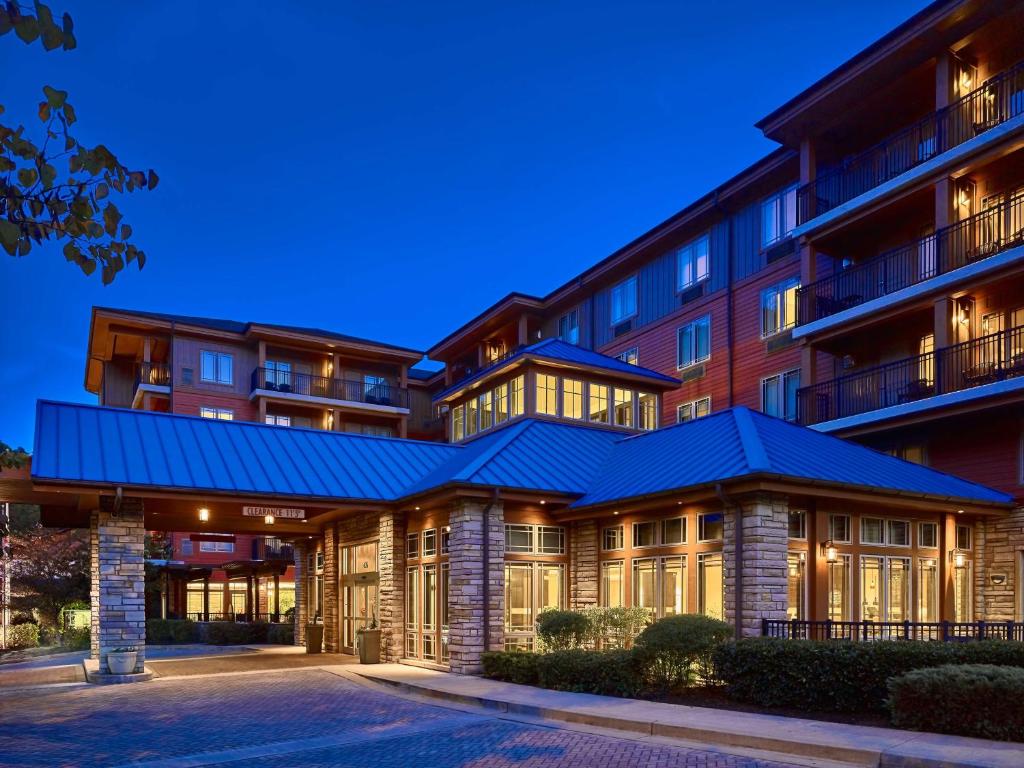
Hilton Garden Inn Gatlinburg
This pet-friendly, smoke-free hotel features free WiFi, an indoor pool and hot tub, on-site dining at the Garden Grille with a bar and happy hour, a fitness center, family-friendly amenities like in-room microwaves and refrigerators, free parking (including accessible options), cooked-to-order breakfast, a business center with over 1,100 sq ft of meeting space, laundry facilities, and convenient access to golf, tennis, hiking, and skiing, all in a five-story building built in 2009 with extensive accessibility features throughout.
Book Now
Historic Rocky Waters Inn
Newly remodeled in 2024, Historic Rocky Waters Inn, A Small Luxury Hotel offers upscale comfort just steps from Ripley’s Aquarium of the Smokies, Anakeesta, and SkyPark. This boutique retreat blends modern elegance with Gatlinburg charm, featuring a scenic terrace, outdoor entertainment space, and a cozy bar. Guests can enjoy breakfast or dinner at the on-site restaurant, The Heirloom Room, and stay connected with free in-room WiFi. Additional perks include free self-parking, concierge service, and express check-in/check-out for added convenience. Each guestroom is thoughtfully designed with premium bedding, air conditioning, and bathrobes, plus modern touches like 50-inch flat-screen TVs, workspaces, and balconies. With glowing reviews for its walkable location and attentive service, this small luxury stay is perfect for travelers seeking both style and substance in the Smokies.
Check Availability
Margaritaville Resort
Conveniently situated in the Gatlinburg part of Gatlinburg (TN), this property puts you close to attractions and interesting dining options. This 4-star property is packed with in-house facilities to improve the quality and joy of your stay.
Buy Now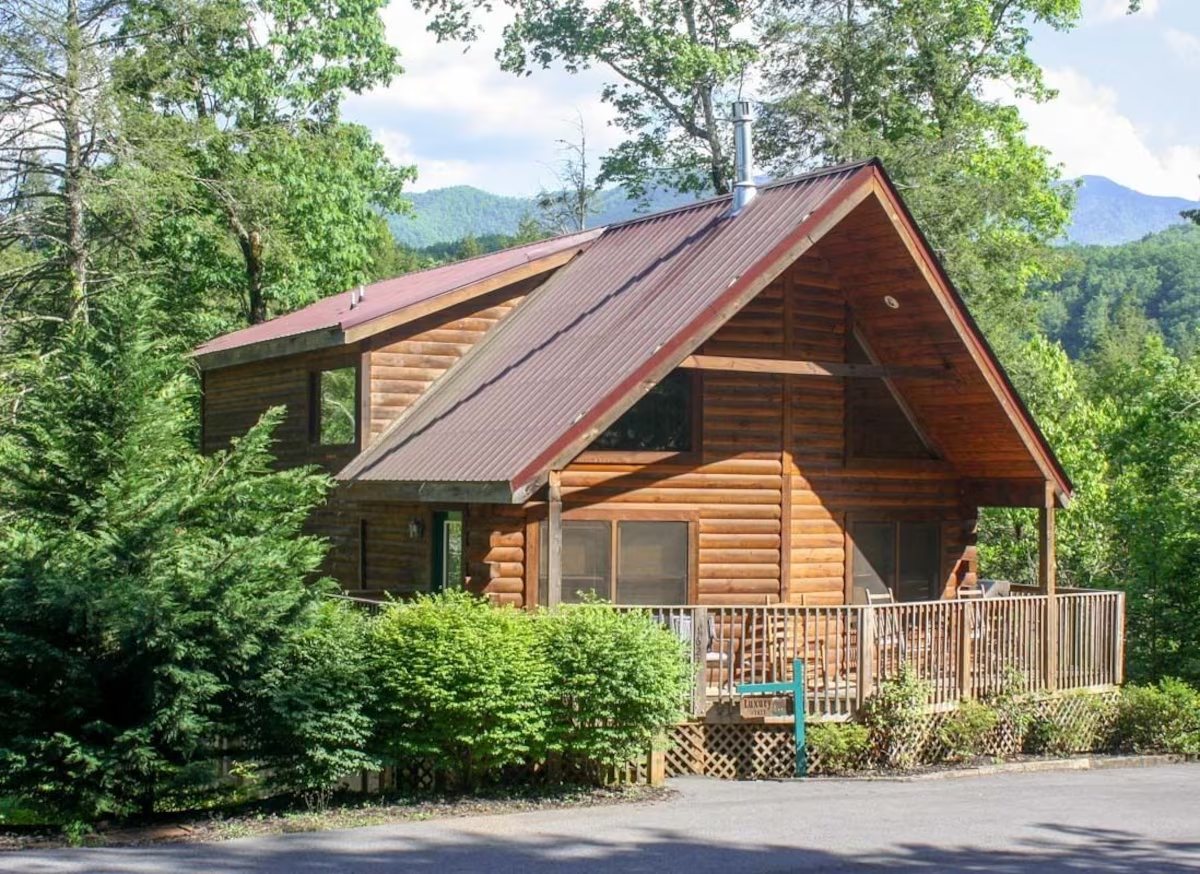
Mountain Shadow Resort & Rentals
Experience rustic luxury in the heart of the Smokies at Mountain Shadows Resort Rentals, where charming log cabins meet modern convenience. Whether you're planning a romantic honeymoon or a lively family reunion, this resort offers spacious accommodations complete with hot tubs, fireplaces, fully equipped kitchens, game rooms, and even gas/electric grills for cookouts under the stars. Guests can enjoy on-site amenities like a seasonal swimming pool, children’s playground, free high-speed WiFi, and pet-friendly options—making it easy for everyone to feel at home. Nestled adjacent to the Great Smoky Mountains National Park and conveniently located near the Gatlinburg trolley line, you're never far from scenic hikes, mountain views, and local attractions. While the resort holds an average rating of 3.1, many guests appreciate its peaceful setting and unique log-home atmosphere. With family rooms, non-smoking options, and features like whirlpool tubs and fireplaces, Mountain Shadows Resort invites you to unwind, explore, and make lasting memories in one of Gatlinburg’s most scenic spots.
Buy Now
River Edge Inn
Conveniently located near the Gatlinburg Convention Center, Gatlinburg Space Needle, and Ripley's Believe It or Not Museum, River Edge Inn offers a welcoming stay just steps from the action. Guests can start their day with a complimentary to-go breakfast, relax on the terrace, or unwind by the cozy lobby fireplace. The hotel features a seasonal outdoor pool and children’s pool with sun loungers, as well as a snack bar/deli, free self-parking, and high-speed in-room WiFi (50+ Mbps). Each guestroom is equipped with premium bedding, air conditioning, a private balcony, and essentials like a microwave, refrigerator, and 32-inch TV with premium channels. Families will appreciate extras like hypoallergenic bedding and available cribs, while guest reviews consistently praise the helpful staff and clean, comfortable rooms. Whether you're here for business or a mountain getaway, River Edge Inn delivers easy comfort in a prime downtown location.
Buy Now
River Terrace Resort and Convention Center
Just steps from Ripley’s Aquarium of the Smokies, Anakeesta, and SkyPark, River Terrace Resort & Convention Center offers comfort, convenience, and a touch of Southern hospitality in the heart of Gatlinburg. Guests enjoy a complimentary to-go breakfast each morning and can take advantage of an outdoor pool, free self-parking, and practical amenities like laundry facilities and a business center. The resort also offers concierge service, tour assistance, and express check-out to make your stay hassle-free. Each of the 205 rooms is equipped with air conditioning, flat-screen TVs, in-room safes, and free WiFi, along with bathrooms that feature hydromassage showers or tubs. With high marks for its friendly staff and central location, River Terrace is an ideal base for exploring the Smokies or attending events downtown.
Buy Now
Sidney James Mountain Lodge
Set against the scenic backdrop of the Smoky Mountains, Sidney James Mountain Lodge offers a warm, family-friendly retreat just minutes from Gatlinburg’s top attractions. Guests enjoy free WiFi, cozy rooms with flat-screen TVs, in-room coffee, air conditioning, and private balconies in select accommodations. Relax in style with access to three outdoor pools, a serene indoor pool, a kids' pool, and a soothing sauna—perfect after a day of exploring. On-site free parking adds convenience, while the Poolside Café, serving breakfast and lunch, makes grabbing a bite easy. Located near beloved local art galleries like Fowler’s Clay Works and the Great Smoky Arts & Crafts Community, Sidney James is more than just a place to stay—it’s a gateway to the charm and adventure of Gatlinburg. Pet-friendly and offering a variety of room types including suites, it’s a comfortable, value-rich option for families, couples, and explorers alike.
Book Now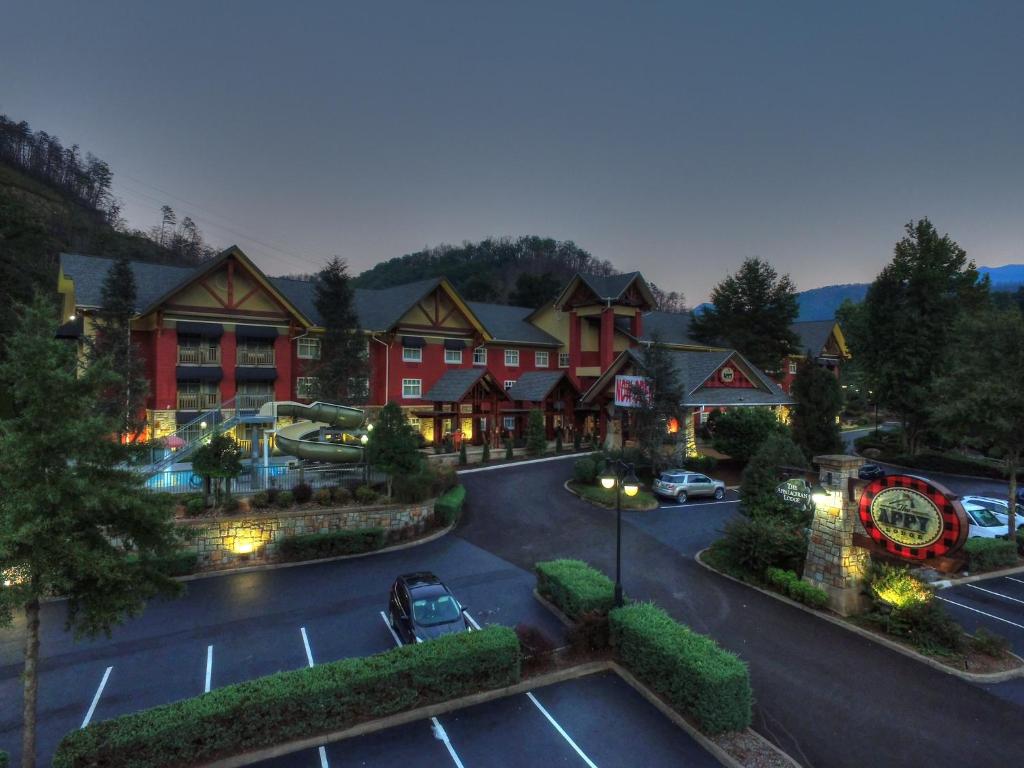
The Appy Lodge
Just a short distance from Anakeesta, Ripley’s Aquarium of the Smokies, and Ole Smoky Moonshine Distillery, The Appy Lodge offers a charming blend of comfort and convenience in the heart of Gatlinburg. Guests can unwind in the hot tub, enjoy a swim in either the seasonal outdoor pool or indoor pool, and stay active at the on-site gym. The hotel also features a terrace, business center, gift shop, and free self-parking. Each of the 101 rooms is designed with guest comfort in mind, offering premium bedding, air conditioning, free WiFi, and thoughtful amenities like flat-screen TVs, mini fridges, and microwaves. With laundry facilities, 24-hour front desk service, and tour assistance available, The Appy Lodge delivers a relaxed, welcoming stay just minutes from the area’s top attractions.
Buy Now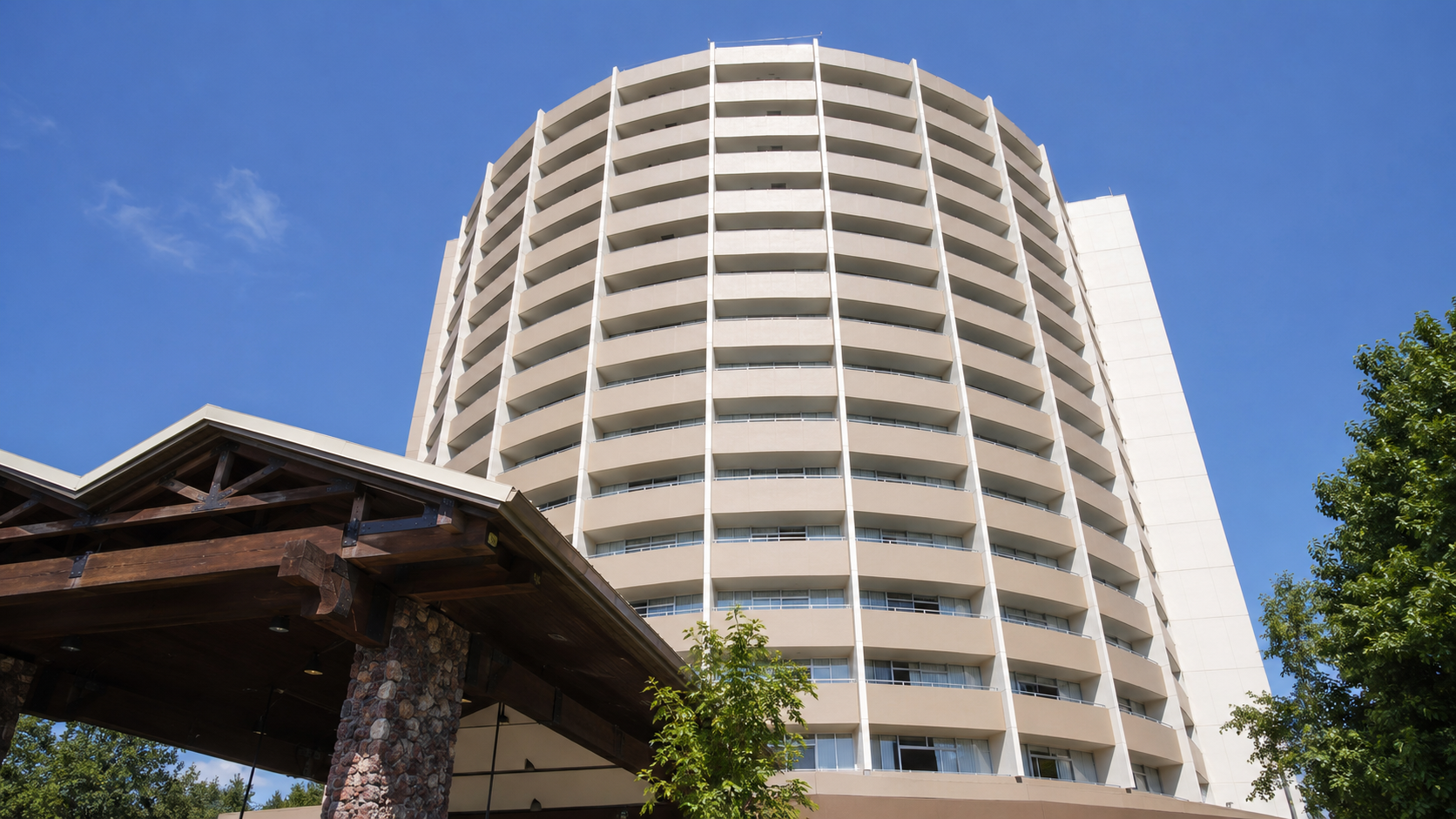
The Park Vista
Rising above downtown Gatlinburg on Cherokee Orchard Road, The Park Vista offers a quieter hillside stay with sweeping city and Smoky Mountain views. Families can enjoy the multi-level indoor pool complex with waterslides, a children’s area, and whirlpool, while several on-site dining options make breakfast, coffee, drinks, and relaxed evening meals convenient. Guest rooms include king, two-queen, and double-king configurations, with select rooms offering balconies and designated mountain or city views. Complimentary Wi-Fi, Hilton Honors benefits, connecting-room options, and a free Gatlinburg trolley stop at the hotel add practical value. Breakfast and self-parking cost extra, so compare the complete rate before booking. With its distinctive circular tower, full-service amenities, and separation from the Parkway crowds, The Park Vista is especially well suited to families, couples, and national park visitors who value scenery over immediate downtown walkability.
Check Availability Now
Greystone Lodge on the River
Set beside the river in the heart of downtown Gatlinburg, Greystone Lodge on the River offers an exceptionally convenient base beside Ripley’s Aquarium of the Smokies and just across the Parkway from Anakeesta. Guests receive complimentary breakfast, free self-parking, free Wi-Fi, and access to a seasonal heated outdoor pool with a waterslide. Every room includes a balcony or ground-floor patio, while selected riverfront rooms and suites add water views, fireplaces, soaking tubs, or family-friendly sleeping arrangements. A trolley stop at the hotel entrance provides another easy way to explore town. Greystone does not offer an indoor pool, spa, or on-site restaurant, and not every room overlooks the river, so check the exact room category before booking. With its walkable location, included essentials, and relaxed riverfront setting, Greystone is especially well suited to families, couples, and first-time visitors who want to leave the car parked and spend their holiday exploring Gatlinburg.
Check Availability Now
Embassy Suites by Hilton Gatlinburg Resort
Set less than half a mile from downtown Gatlinburg, Embassy Suites by Hilton Gatlinburg Resort offers a modern, family-focused stay near the Great Smoky Mountains National Park. Guests receive complimentary made-to-order breakfast, free Wi-Fi, and access to the nightly Evening Reception. Spacious accommodations, an indoor pool, and a seasonal outdoor pool complex with a lazy river and waterslide make the resort particularly appealing to families planning a multi-night stay. An on-site restaurant, bar, fitness centre, and pet-friendly rooms add further convenience. Embassy Suites is not directly on the Parkway, however, and the uphill return from downtown may prove tiring for young children or travellers with limited mobility. On-site self-parking also carries a nightly charge, while the lazy river and waterslide are seasonal. With its additional living space, included breakfast, and unusually strong pool facilities, Embassy Suites is best suited to families and larger groups who will use the amenities enough to justify the higher total price.
Check Availability Now
Old Creek Lodge
Set along a mountain stream on River Road, Old Creek Lodge offers a comfortable base between downtown Gatlinburg and the entrance to Great Smoky Mountains National Park. Every room includes a private stream-facing balcony, gas fireplace, mini-refrigerator, microwave, and Keurig coffee maker, giving the property more character and practicality than a typical downtown hotel. Guests also receive complimentary continental breakfast, free Wi-Fi, free on-site parking, and access to a heated seasonal outdoor pool. The western Parkway, Ober Mountain Aerial Tramway, and several restaurants and attractions are within walking distance, although destinations near Ripley’s Aquarium and Anakeesta require a longer stroll. Old Creek Lodge does not offer an indoor pool, restaurant, bar, spa, or extensive resort facilities, and pets are not permitted. Whirlpool tubs are available only in selected Spa room categories. With its creekside balconies, fireplaces, convenient location, and consistently strong guest feedback for cleanliness and service, Old Creek Lodge is particularly well suited to couples, small families, and park-focused travelers who prefer room atmosphere and walkability over resort-style extras.
Check Availability Now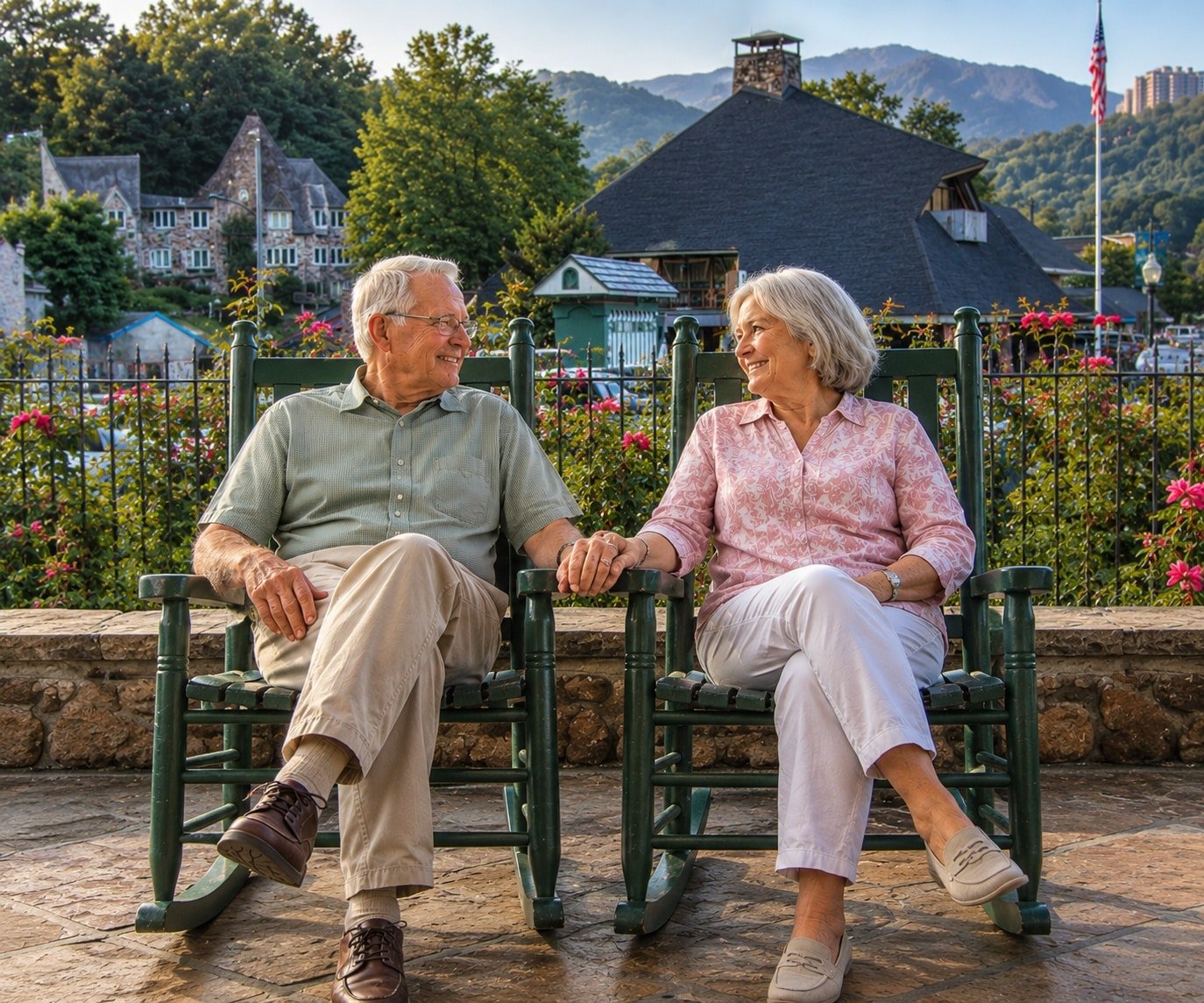
The Historic Gatlinburg Inn
Set directly on the Parkway in the heart of downtown, The Historic Gatlinburg Inn offers a characterful base beside Gatlinburg SkyPark and across from the Gatlinburg Space Needle. Guests receive a complimentary Southern hot breakfast, free Wi-Fi, free on-site parking, and access to a seasonal outdoor pool, along with inviting common areas featuring fireplaces, historic photographs, puzzles, and porch rocking chairs. Room layouts vary considerably, with options ranging from traditional standard rooms to corner rooms with wraparound balconies, family suites, parlor arrangements, Presidential Suites, and Room 388, where “Rocky Top” was written. Standard rooms do not automatically include a mini-refrigerator, microwave, or balcony, so guests should confirm the exact category before booking. The inn does not offer an indoor pool, hot tub, spa, fitness centre, full-service restaurant, or bar, and pets are not permitted. With its exceptional walkability, included parking and breakfast, authentic Gatlinburg history, and frequently praised hospitality, The Historic Gatlinburg Inn is particularly well suited to couples, families, music enthusiasts, and repeat visitors who value independent character over modern resort-style amenities.
Check Availability Now
Hilton Garden Inn Gatlinburg
Set on River Road just off the busier Parkway, Hilton Garden Inn Gatlinburg offers a comfortable, walkable base near downtown and the Great Smoky Mountains. Rooms include microwaves, mini-refrigerators, and coffee makers, while selected categories add balconies, fireplaces, whirlpool tubs, or additional suite space. Guests also have access to an indoor saltwater pool, outdoor hot tub, courtyard fire pit, fitness center, and The Garden Grille & Bar. The hotel welcomes pets for an additional fee and participates in Hilton Honors. Breakfast is available but generally not complimentary, and on-site self-parking currently costs extra. It is best suited to couples and families who value dependable branded comfort and a slightly quieter downtown location.
Check Availability Now
Hampton Inn Gatlinburg
Set along LeConte Creek at 967 Parkway, Hampton Inn Gatlinburg offers a convenient downtown base near restaurants, attractions, and the Great Smoky Mountains. Rooms include mini-refrigerators, microwaves, and coffee makers, while selected categories add private balconies, creek views, or fireplaces. Guests also have access to complimentary hot breakfast, free Wi-Fi, an outdoor pool, hot tub, and fitness center. The hotel welcomes dogs and cats for an additional fee and participates in Hilton Honors. Covered parking is available, although on-site self-parking currently costs extra. It is best suited to couples, families, pet owners, and park visitors who value excellent Parkway walkability and a creek-side setting more than extensive resort-style amenities.
Check Availability Now


Which Smoky Mountain Overlook Should You Choose?
You don’t need all ten overlooks to feel you’ve seen the Smokies well. Match the viewpoint to the day you actually have.
Best overall: Kuwohi gives you the biggest high-elevation experience and the park’s highest viewpoint.
Best sunset: Morton Overlook combines western light with beautifully stacked mountain ridges.
Best easy roadside view: Carlos Campbell gives considerable scenery for almost no physical effort.
Best first-time stop: Newfound Gap combines views, accessibility, geography, and history.
Best iconic mountain view: Chimney Tops provides a recognizable peak rather than another broad panorama.
Best quieter alternative: Look Rock rewards travelers willing to explore the park’s western side.
Best scenic drive: Foothills Parkway lets the overlooks come to you.
Best valley view: Cades Cove surrounds you with mountains rather than putting you above them.
Best fall-color drive: Newfound Gap Road’s elevation changes give you multiple chances to find strong color.
If you have only half a day, I’d choose quality over quantity: Newfound Gap, Kuwohi, and one good roadside overlook.
Best Time to Visit the Smoky Mountain Overlooks
Sunrise
Early morning offers two advantages: softer light and fewer people. East-facing views can catch the first light beautifully, while valleys may still hold mist. Even when sunrise itself is hidden, morning often produces atmospheric mountain layers.
Sunset
Morton Overlook is my first choice for a dedicated sunset stop. Foothills Parkway is better if you’d rather have several viewpoints available and decide based on clouds and visibility that evening.
Fall
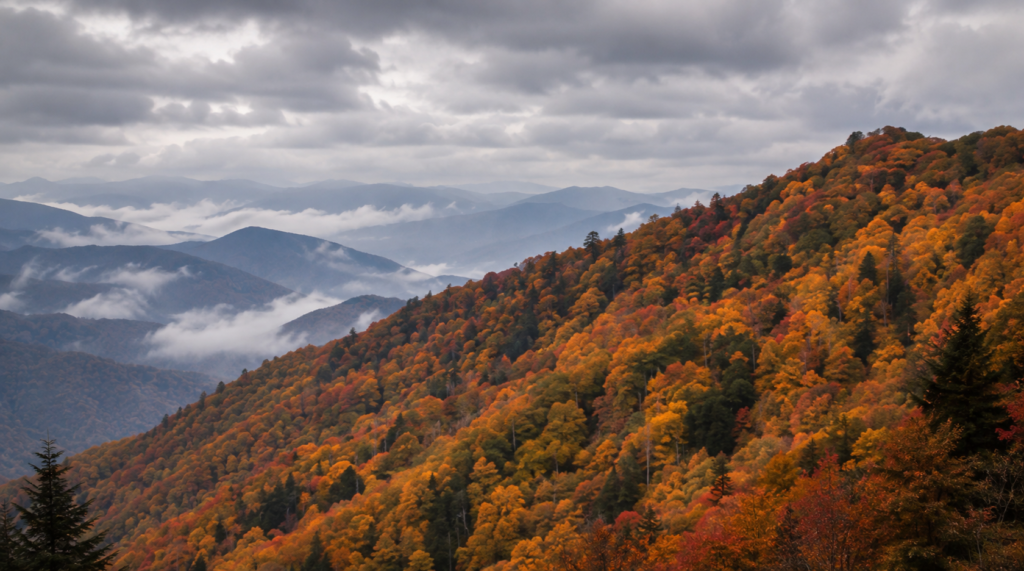
Don’t obsess over a single “peak” weekend. Elevation changes dramatically across the Smokies, so color near Kuwohi can be well ahead of lower valleys. Driving through several elevations gives you better odds than planning around one date months beforehand.
Winter
Clear winter air can produce remarkable long-distance visibility. The tradeoff is access: weather can temporarily close mountain roads, and Kuwohi Road itself closes seasonally.
Foggy Days
Fog isn’t automatically a wasted overlook day. If Kuwohi is completely covered, lower viewpoints may still be clear. I’ve learned to change elevation before giving up. The Smokies can look entirely different just a few miles down the mountain.
Before You Pull Into an Overlook
Most overlook problems aren’t complicated. They’re caused by somebody seeing a great view and forgetting they’re still driving on a mountain road.
Use established pull-offs and parking areas, and don’t stop in the travel lane for a photograph. If roadside parking is permitted, get all four wheels safely clear of traffic. At crowded destinations, don’t create your own space in vegetation or a marked no-parking zone.
Barriers are there for a reason, too. A slightly cleaner photograph isn’t worth climbing around a guardrail on a steep mountainside.
Check road conditions before leaving Gatlinburg, particularly when storms, ice, or high-elevation weather are possible. Kuwohi Road is seasonal, while Newfound Gap Road is generally open year-round, weather permitting.
Remember the parking-tag rule as well. If your vehicle is parked inside Great Smoky Mountains National Park for longer than 15 minutes, a valid parking tag is required. Current prices are $5 daily, $15 weekly, or $40 annually. Buying one doesn’t guarantee a space.
Finally, admire wildlife from a safe distance. An overlook isn’t a shortcut to a closer animal photograph.
Build an Overlook Day From Gatlinburg
For a first overlook-focused day from Gatlinburg, I’d keep the route simple: Gatlinburg → Sugarlands → Carlos Campbell Overlook → Chimney Tops Overlook → Morton Overlook → Newfound Gap → Kuwohi.
That progression works because the scenery gets steadily bigger as you gain elevation, rather than having you zigzag across the park chasing isolated viewpoints. Use the Scenic Drives in Great Smoky Mountains National Park guide if you’d like more detail on the road itself.
From Newfound Gap, take Kuwohi Road when it’s open and conditions look promising. Afterward, either return toward Gatlinburg or continue down the North Carolina side toward Oconaluftee and Cherokee if you still have daylight and energy.
But don’t let the itinerary boss you around. If Kuwohi is buried in cloud, I wouldn’t spend an hour sitting in the parking lot waiting for the mountain to cooperate. Drop in elevation, where conditions may be completely different.
Back in town, you’ll still have plenty of things to do in Gatlinburg if changing weather sends you out of the park earlier than planned.
Where to Eat Before or After Your Overlook Drive
For an early start, Crockett’s Breakfast Camp makes sense when you want a substantial Gatlinburg breakfast before spending several hours in the park. I’d allow extra time during busy mornings rather than making your overlook schedule depend on being seated immediately.
Old Dad’s General Store is the practical option near the park entrance when you’d rather grab sandwiches, snacks, and drinks and keep moving.
After the drive, Smoky Mountain Brewery works better for travelers ready to sit down over burgers, wings, or a casual dinner rather than rush onto another attraction.
Those are itinerary choices, not destination meals for this particular day. For more options, the full guide to where to eat in Gatlinburg after a day in the Smokies makes more sense than turning an overlook trip into a restaurant crawl.
Final Take — Stop Chasing the “Perfect” Smoky Mountain View
I’ve stopped trying to decide which Smokies view is the one everyone needs to see. These mountains don’t work that way.
Kuwohi gives you altitude and scale. Morton Overlook gives you that classic sunset layering. Newfound Gap combines scenery with a sense of place. Foothills Parkway lets you stand back and see the mountains as a long wall of ridges. Cades Cove does almost the opposite, putting you down in the valley with the mountains rising around you.
Pick two or three priorities, then let the day unfold.
Some of my favorite Smokies moments have come when the viewpoint I planned for was buried in fog, so I drove another few miles and found sunlight pouring through a gap in the clouds.
That’s part of traveling here. The mountains change faster than your itinerary. Don’t fight that. Leave enough room in the day to follow the light, the weather, and whatever view happens to open next.